Introduction
Home is more than a building. It holds your belongings, provides comfort for your family and often represents one of your largest financial investments. A fire, storm, burglary or unexpected accident can create expensive problems. Understanding Insurance Coverage before something goes wrong can help you prepare for these risks and protect your finances.
Home insurance is designed to help homeowners recover from certain unexpected losses. However, not every policy protects against every type of damage. The protection you receive depends on your policy wording, coverage limits, exclusions and any additional options you purchase.
In this guide, we explain what home insurance coverage commonly includes, what it may exclude and how to review your policy. Although specific rules vary between countries, the main principles can help you understand your options and ask better questions when comparing policies.

What Is Home Insurance Coverage?
Home insurance coverage is a contract between a property owner and an insurance company. You pay a premium, and the insurer agrees to pay for certain covered losses according to the policy terms.
The purpose of Insurance Coverage is to reduce the financial impact of eligible damage, theft or liability claims. A standard homeowners policy in the United States commonly includes protection for the house, other structures, personal belongings, certain temporary living expenses and personal liability.
Other countries may use different insurance products or terminology. For example, building insurance and contents insurance coverage may be purchased separately. Therefore, never assume that a policy in one country provides the same protection as a policy elsewhere.
What Does a Home Insurance Policy Usually Cover?
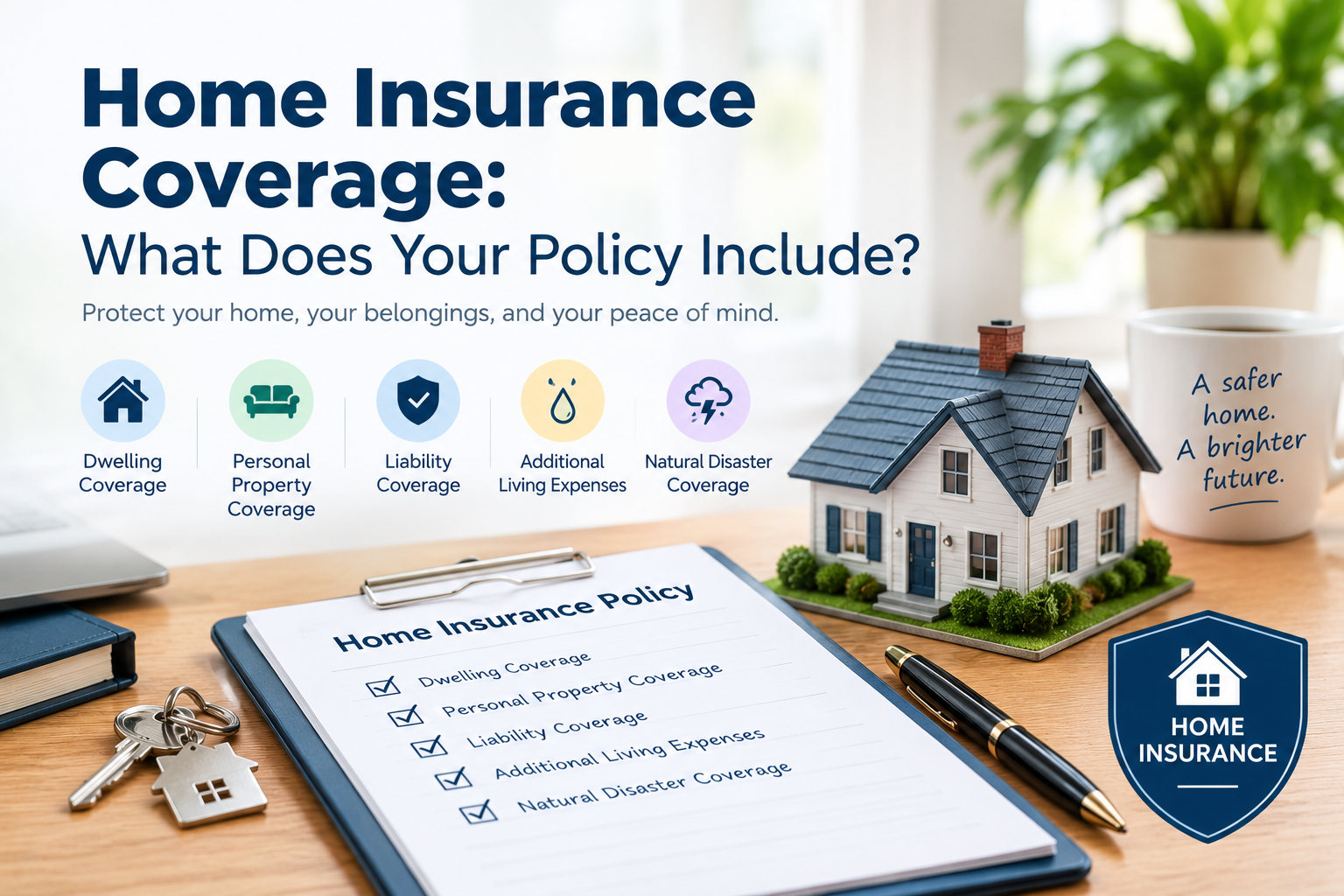
Dwelling Coverage
Dwelling coverage protects the main structure of your home against covered events. Depending on the policy, this may include the roof, walls, floors, built-in cabinets, plumbing and permanently installed fixtures. For example, if a covered fire damages your kitchen and part of your roof, dwelling protection may help pay for eligible repairs or rebuilding costs.
When choosing Insurance Coverage for your home, consider the cost of rebuilding the property rather than relying only on its current market value. Land value, local labour costs, building materials and construction features can affect the amount required to rebuild.
Other Structures on Your Property
Some homes have structures that are separate from the main building. These might include a detached garage, garden shed, fence or workshop. A homeowners policy may cover these structures when they are damaged by an insured event. However, the amount available is often limited, and certain structures or business uses may require additional protection.
For example, a homeowner with an expensive detached workshop should check whether the standard limit would cover the cost of rebuilding it. Additional Insurance Coverage may be necessary if the existing limit is too low.
Personal Belongings and Household Contents
Contents protection can help pay for eligible losses involving items such as furniture, clothing, televisions, computers and kitchen appliances. Suppose a covered fire destroys your sofa, dining table and television. Your policy may reimburse you for the covered belongings, subject to its limits, deductible and settlement rules.
Pay attention to the difference between replacement cost and actual cash value. Replacement-cost protection generally pays the eligible cost of replacing an item with a comparable new one, subject to policy conditions. Actual cash value usually accounts for depreciation.
Certain valuables, including jewellery, artwork, collectibles and expensive electronics, may have special limits. You might need to list them separately or purchase additional protection. Keeping photographs, receipts and a home inventory can make a claim easier to document.
Temporary Living Expenses
If a covered event makes your home uninhabitable, your policy may pay some additional living expenses while repairs take place. This protection is often called loss of use or additional living expenses. Eligible costs may include temporary accommodation, additional food expenses and other necessary costs above your normal living expenses. The exact benefits depend on the contract.
For example, if a covered kitchen fire forces your family to stay in temporary accommodation, this part of your Insurance Coverage may help with qualifying extra costs. Keep receipts and ask your insurer about time limits, financial limits and approval requirements. You will generally remain responsible for ordinary expenses you would have paid anyway, such as your usual mortgage payment.
Personal Liability Protection
Personal liability protection may help if you are legally responsible for accidentally injuring another person or damaging their property. Imagine a visitor slips on an unsafe walkway at your home and brings a claim against you. Depending on the circumstances, your policy may cover eligible damages and legal defence costs up to the applicable limit.
This protection can be particularly useful because liability claims may involve costs beyond the price of repairing physical property. However, exclusions and conditions apply, so review the policy carefully.
Medical Payments to Others
Some policies include limited medical payments coverage for certain injuries suffered by visitors. This benefit may pay eligible minor medical expenses without requiring a finding that the homeowner was legally responsible.
For instance, if a guest suffers a minor injury at your property, this section may help cover eligible treatment costs within its limit. Medical payments protection is different from personal liability coverage. It usually has a lower limit and does not replace comprehensive health insurance coverage.
What Does Home Insurance Usually Exclude?
Understanding exclusions is just as important as understanding included benefits. A policy may provide valuable protection while leaving certain major risks uninsured.
Flood and Earthquake Damage
Standard homeowners policies in many markets exclude flood damage and earthquake damage. Separate policies or optional endorsements may be available, depending on the location and insurer. Flooding can result from overflowing rivers, heavy rainfall, storm surges or surface water. Do not assume that ordinary water-damage protection automatically covers these events.
Earthquake protection also deserves attention in areas exposed to seismic activity. Check local insurance options before deciding whether your existing Insurance Coverage is sufficient.
Wear and Tear and Poor Maintenance
Home insurance coverage generally is not intended to pay for routine maintenance or gradual deterioration. Ageing roofs, neglected repairs, corrosion and long-term leaks may be excluded or restricted.
For example, a roof that deteriorates over several years may not qualify for the same treatment as sudden damage caused by a covered storm. Maintaining your property can reduce preventable problems and help avoid disputes about whether damage was sudden, accidental or caused by neglect.
Other Policy Exclusions
Depending on the contract, exclusions may also apply to pest damage, mould, intentional damage, certain business activities and particular types of water loss.
Read the exclusions section and ask the insurer to explain anything unclear. Some risks can be covered through an endorsement or separate policy, while others may remain uninsured.

How to Choose the Right Home Insurance Coverage
Start by estimating the cost of rebuilding your home and replacing your belongings. Consider construction materials, local building costs, valuable possessions and the risks associated with your location. Next, compare policy limits, deductibles and exclusions. A lower premium may look attractive, but a high deductible or narrow protection can leave you paying more after a major loss.
Review the settlement method for both your home and belongings. Understand whether claims are settled on a replacement-cost or actual-cash-value basis and whether special limits apply.
Finally, consider your financial situation. You should be able to afford your chosen deductible without creating serious financial difficulty. Compare quotes from reputable insurers and confirm that the policy is suitable for your property and circumstances. The right Insurance Coverage balances the protection you need with premiums you can reasonably afford.
Practical Example: Reviewing a Home Insurance Policy
Imagine a homeowner whose property is insured for rebuilding costs and whose household belongings are covered under the same policy. A kitchen fire damages the building, destroys furniture and forces the family to move temporarily.
Depending on the policy, dwelling coverage may help pay for eligible structural repairs, contents protection may cover qualifying damaged possessions and additional living expenses may contribute toward temporary accommodation. However, the final payment depends on coverage limits, deductibles, depreciation rules, exclusions and the insurer’s assessment of the claim.
If the same property is damaged by an excluded flood, the standard policy may not pay for the loss. This example shows why reviewing Insurance Coverage before an emergency is more useful than relying on assumptions after damage occurs.
Benefits and Limitations of Home Insurance
The main benefit of home insurance coverage is financial support after eligible unexpected losses. It can help homeowners repair property, replace belongings and manage certain liability claims. Some policies also help cover additional living expenses when a covered event prevents normal occupancy.
However, protection is not unlimited. Premiums can increase, deductibles reduce claim payments, coverage limits may be insufficient and excluded events can leave substantial expenses uninsured.
Home insurance coverage also does not eliminate the need for maintenance or an emergency fund. A balanced approach combines suitable insurance with responsible property care and financial preparation.

Frequently Asked Questions
Q1. What does home insurance usually cover?
Home insurance commonly covers the dwelling, certain detached structures, personal belongings, personal liability and some additional living expenses. The exact protection depends on the policy and local insurance rules.
Q2. Does home insurance cover floods?
Standard homeowners policies in many markets exclude flood damage. Separate flood insurance or an additional endorsement may be available. Check your policy and local options before relying on existing protection.
Q3. Does home insurance cover roof leaks?
It depends on the cause of the leak and the contract. Sudden damage caused by a covered event may qualify, while gradual deterioration, poor maintenance or long-term seepage may be excluded.
Q4. How much home insurance do I need?
Choose limits that reflect realistic rebuilding costs, the value of your belongings, potential liability claims and temporary living expenses. Consider special limits and location-specific risks when comparing policies.
Q5. Can I change my home insurance coverage later?
Many insurers allow policyholders to request changes, including higher limits or additional endorsements. Availability, underwriting requirements and premium changes vary. Contact your insurer to confirm your options.
Final Thoughts
Understanding Insurance Coverage helps you make more informed decisions about protecting your home and finances. A suitable policy can provide valuable support after covered damage, theft or liability claims, but exclusions and limits determine how much protection you actually receive.
Review your policy regularly, maintain an inventory of your belongings and consider risks such as flooding or earthquakes that may require separate protection. Compare policies based on their terms and overall value rather than choosing solely by price.
Taking time to understand your home insurance today can help you prepare for unexpected expenses and protect the place you call home.