Introduction
Protecting your home involves more than keeping the doors locked and maintaining the roof. Unexpected events can damage your property, while everyday wear and tear can cause appliances and household systems to stop working. Understanding the difference between home insurance and a home warranty can help you prepare for both situations without paying for unnecessary coverage.
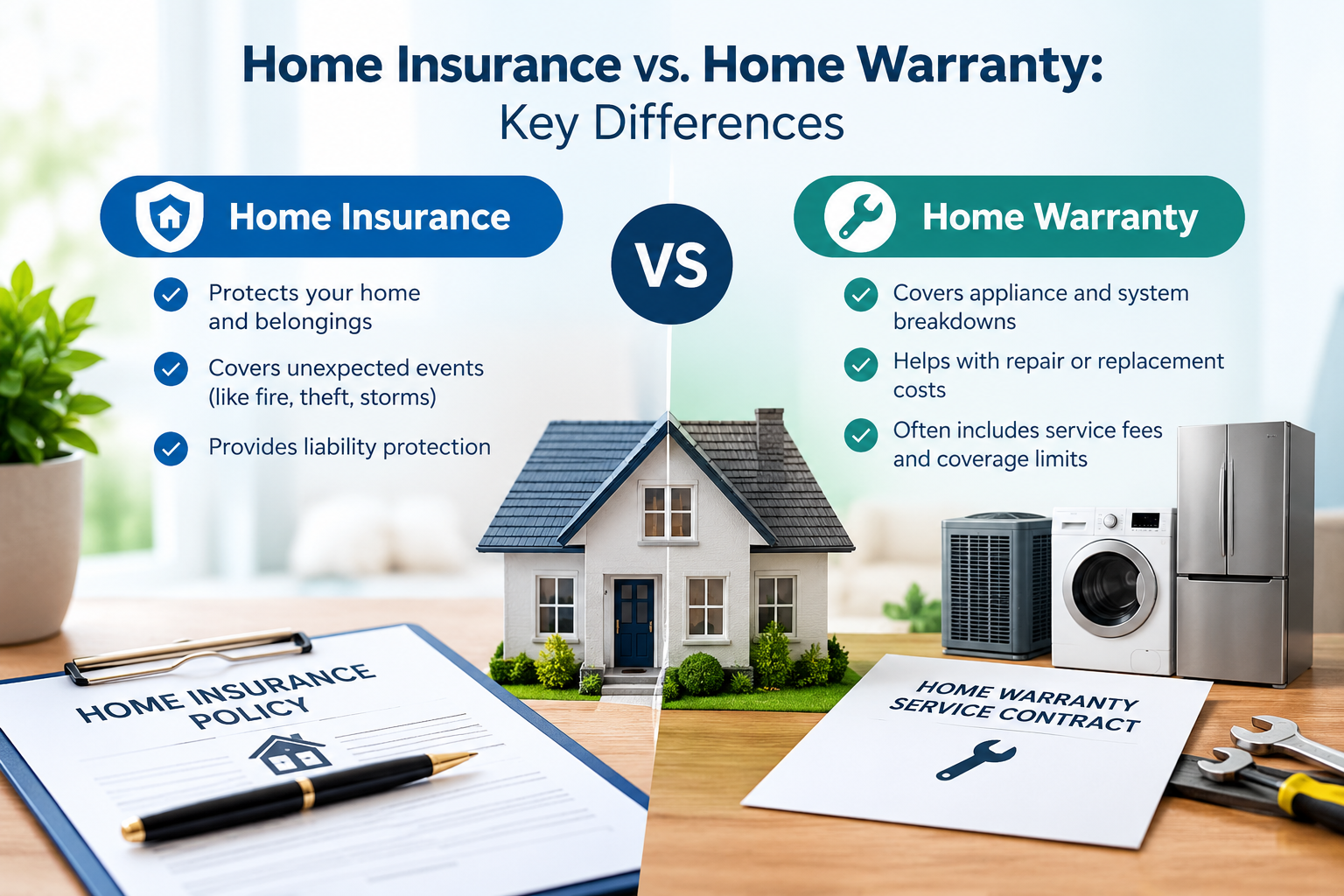
Home insurance generally protects your home and belongings against specified unexpected events, such as fire, theft, and certain types of storm damage. A home warranty, by contrast, is usually a service contract that helps pay for the repair or replacement of eligible appliances and home systems when they break down under the contract’s terms.
Although both options can help manage household expenses, they serve different purposes. This guide explains how each works, what they cover, their costs and limitations and how to decide whether you need one or both.

What Is Home Insurance?
Home insurance is a policy that provides financial protection against covered losses involving your property. Depending on the policy, it may protect the building, personal belongings and your legal liability if someone is injured on your property.
For example, if a fire damages your kitchen, home insurance may help pay for covered repairs and damaged belongings, subject to your policy limits, deductible, and exclusions.
What Does Home Insurance Cover?
Coverage varies by insurer, location and policy. Common protections include:
- Dwelling coverage: Helps pay to repair or rebuild the insured structure after covered damage.
- Personal property coverage: Helps cover eligible belongings, such as furniture, clothing and electronics.
- Personal liability: May cover certain claims if you are legally responsible for another person’s injury or property damage.
- Additional living expenses: May help pay for temporary accommodation and other eligible extra costs when a covered event makes your home uninhabitable.
- Other structures: May protect eligible detached garages, sheds, and fences.
Home insurance does not cover every possible disaster. Floods and earthquakes often require separate policies or additional coverage, depending on the country and contract. Routine maintenance, gradual deterioration, and mechanical breakdowns are also commonly excluded.
Before choosing home insurance, check the rebuilding cost of your property, the value of your belongings, the deductible, and the exclusions. A suitable policy should reflect your actual risks rather than simply offer the lowest premium.
What Is a Home Warranty?
A home warranty is generally a service contract that covers specified appliances or household systems when they experience eligible breakdowns. Unlike home insurance, it is not primarily designed to protect the building against major accidental losses.
Depending on the plan, a home warranty may cover:
- Heating and cooling systems
- Electrical systems
- Interior plumbing
- Water heaters
- Refrigerators and ovens
- Washing machines and dishwashers
Coverage differs significantly between providers. Some plans include only selected appliances, while others cover a combination of appliances and built-in systems.For example, suppose your refrigerator stops cooling because an eligible component fails after years of use. A home warranty may arrange or contribute toward a repair under its contract. However, you may still have to pay a service fee, and the provider may apply coverage limits or exclusions.
A home warranty is not a guarantee that every repair will be free. Before purchasing one, review the contract, including waiting periods, pre-existing condition rules, service fees, replacement limits, and the company’s repair approval process.
Home Insurance vs. Home Warranty: Key Differences
The main difference is the type of problem each product is designed to address. Home insurance generally covers specified losses caused by covered events, while a home warranty generally addresses breakdowns of eligible appliances and systems.
| Feature | Home Insurance | Home Warranty |
|---|---|---|
| Main purpose | Protects against covered property losses | Helps with eligible repairs or replacements |
| Typical example | Fire or covered storm damage | A covered appliance breakdown |
| Structural damage | Often covered when caused by an insured event | Generally not covered as structural damage |
| Appliances | May cover damage from an insured event | May cover mechanical breakdowns |
| Personal belongings | Usually included, subject to limits | Generally not covered as belongings |
| Liability protection | Often included | Generally not included |
| Deductible or fee | Policy deductible may apply | Service fee may apply per claim |
| Contract period | Commonly renewed periodically | Often sold for a defined term |
| Legal regulation | Regulated as insurance | Regulation varies by jurisdiction |
These differences explain why home insurance and a home warranty should not be treated as interchangeable products.

When Should You Choose Home Insurance?
Home insurance is an important consideration for homeowners because a major covered loss can create substantial repair or rebuilding expenses. Mortgage lenders commonly require appropriate building coverage, although legal requirements vary by country and loan agreement.
Consider a homeowner whose property is damaged by a covered fire. The cost of repairing walls, replacing damaged fixtures, and restoring eligible belongings could be substantial. A suitable insurance policy may cover these losses within its terms and limits.
Benefits of Home Insurance
The main benefit is protection against potentially large financial losses. Depending on the policy, it can also protect personal possessions, provide liability coverage, and contribute toward temporary living expenses after an insured event.
However, home insurance has limitations. Premiums can rise, deductibles affect out-of-pocket costs, and some disasters require separate coverage. Claims may also be denied when the loss falls outside the policy terms. Review your policy annually and update your coverage after renovations, major purchases, or changes in local risks.
When Is a Home Warranty Worth Considering?
A home warranty may be useful when you want help managing the cost of eligible appliance or system breakdowns. It can be particularly relevant if several household systems are aging and you prefer a service contract over paying the full cost of every eligible repair.
For example, imagine your heating system and dishwasher are both several years old. If either develops a covered mechanical fault, a home warranty might reduce the repair expense. The value depends on the contract’s price, service fees, coverage limits, and the repairs you actually need.
Benefits and Limitations of a Home Warranty
A home warranty can make some repair costs more predictable and may simplify finding a service professional. However, providers may restrict which technicians can be used, require prior approval, or impose limits on repairs and replacements.
Some contracts exclude pre-existing faults, poor installation, improper maintenance, or particular components. A provider might also determine that a repair is preferable to replacement.
The important question is whether the expected benefits justify the total cost. Compare the annual contract fee and service charges with the likely cost of repairs, and read independent consumer complaints before committing.
Can You Have Home Insurance and a Home Warranty Together?
Yes. These products can complement each other because they address different risks. Home insurance generally deals with covered damage or loss, while a home warranty may deal with specified mechanical breakdowns. Imagine two separate problems in the same house.
First, a severe storm damages the roof. If the damage is covered, home insurance may help pay for repairs after the applicable deductible. Second, several months later, the refrigerator develops an eligible mechanical fault. A home warranty might help with that repair if the contract includes the appliance and the problem meets its conditions.
The outcome is never automatic. Both providers assess claims under their own terms, and exclusions may apply. You should also avoid assuming that purchasing both products eliminates every financial risk. You may still need to pay deductibles, service fees, excluded repairs, and costs above coverage limits.
How to Decide Which Option Fits Your Needs
Start by identifying the financial risks that concern you most. If your priority is protecting the building, belongings, and liability exposure, appropriate home insurance should generally come first.
Next, consider the age and condition of your appliances and systems. If an unexpected repair would strain your budget, compare available home warranty plans with the cost of saving for repairs yourself.
Use these practical steps before buying either product:
- Review your existing protection. Check your insurance policy, manufacturer warranties, and any service contracts you already have.
- Compare total costs. Include premiums or contract fees, deductibles, service charges, and potential out-of-pocket expenses.
- Read exclusions carefully. Confirm which events, components, and repair situations are excluded.
- Check coverage limits. Find out the maximum amount payable for individual items, claims, or the entire contract.
- Verify the provider. Check its reputation, complaint history, financial standing where relevant, and regulatory status.
- Consider your location. Weather risks, insurance requirements, consumer protections, and contract regulations differ between countries.
Home insurance and home warranty decisions should be based on the actual contract rather than advertising promises. If you are unsure about an exclusion or claim process, ask the provider for a written explanation before purchasing.

Frequently Asked Questions
Q1. Is home insurance the same as a home warranty?
No. Home insurance generally protects against specified property losses and may include personal liability coverage. A home warranty is usually a service contract for repairing or replacing eligible appliances and systems. Each has different terms and exclusions.
Q2. Does home insurance cover broken appliances?
It may cover an appliance that is damaged by a covered event, such as a fire. However, ordinary mechanical breakdown and wear and tear are commonly excluded. Check your policy for the exact coverage.
Q3. Does a home warranty cover roof leaks?
Most standard home warranty plans do not provide general roof replacement or structural protection. Some offer limited roof-leak coverage as an optional benefit, but conditions and exclusions apply. Read the contract before relying on it.
Q4. Should I buy both home insurance and a home warranty?
You may benefit from both if you need property protection and want help with eligible appliance or system repairs. Home insurance is generally the more fundamental protection for major property losses, while a warranty is an optional way to manage certain repair expenses.
Q5. How can I decide whether a home warranty is worth the money?
Compare the annual contract price, service fees, coverage limits, exclusions, and likely repair costs. Consider whether you could comfortably pay for repairs from savings. A warranty may be useful in some situations, but it does not guarantee savings.
Final Thoughts
Understanding the difference between home insurance and a home warranty can help you make more informed decisions about protecting your property and managing household expenses.
Home insurance is designed to protect against covered losses such as fire, theft, and certain types of storm damage. A home warranty may help with eligible appliance and system breakdowns caused by normal use, depending on its terms.
For many homeowners, maintaining suitable insurance coverage is the first priority. A home warranty can be an additional option if its benefits justify the cost. Compare contracts carefully, check exclusions, and choose protection that fits your property’s condition, location, and budget.
1 thought on “Best Home Insurance vs. Home Warranty: Key Differences”