Introduction
Running a business involves making important decisions every day. From managing employees and serving customers to protecting equipment and maintaining cash flow, business owners have many responsibilities. However, unexpected events such as property damage, customer injuries, legal claims, theft or business interruptions can create serious financial challenges.
This is where Small Business Insurance becomes important. It helps business owners manage certain financial risks and protect their operations against covered losses. Whether you operate a small retail shop, an online store, a consulting service or a home-based business, having suitable insurance can provide valuable financial protection.
Choosing the right coverage does not mean purchasing every available policy. Instead, you should understand your business risks, compare insurance options and select policies that match your operations and budget. In this guide, we explain the essential types of Small Business Insurance, how they work, what they may cover and how to choose suitable protection for your company.

What Is Small Business Insurance?
Small Business Insurance refers to insurance policies designed to protect smaller companies against specific financial risks. Depending on the policy, it may cover property damage, third-party injuries, legal expenses, employee-related claims, cyber incidents, and other unexpected losses.
For example, imagine you own a small clothing store. A fire damages your inventory and equipment. Without suitable insurance, you may need to pay for repairs and replacement stock using your business savings. With an appropriate commercial property policy, some of these expenses may be covered, subject to the policy limits, exclusions, and deductible.
Small Business Insurance is not a single policy that covers every possible problem. It is usually a combination of different types of coverage selected according to a company’s activities. Coverage requirements also vary between countries. Some policies may be legally required, while others are optional but recommended because of the risks involved.
Why Is Small Business Insurance Important?
Every company faces different challenges. A restaurant may experience customer injury claims, while an online business may face cyberattacks or data breaches. Even businesses with few employees can experience unexpected financial losses.
Small Business Insurance can help reduce the financial impact of covered incidents. It may also help business owners meet contractual requirements when working with landlords, suppliers, clients or larger companies. Another important benefit is business continuity. If an insured event temporarily prevents normal operations, certain policies may help cover lost income and ongoing expenses during the recovery period.
However, insurance does not eliminate every business risk. Claims can be rejected when an incident falls outside the policy terms, and some losses may exceed coverage limits. Business owners should understand these limitations before purchasing protection.
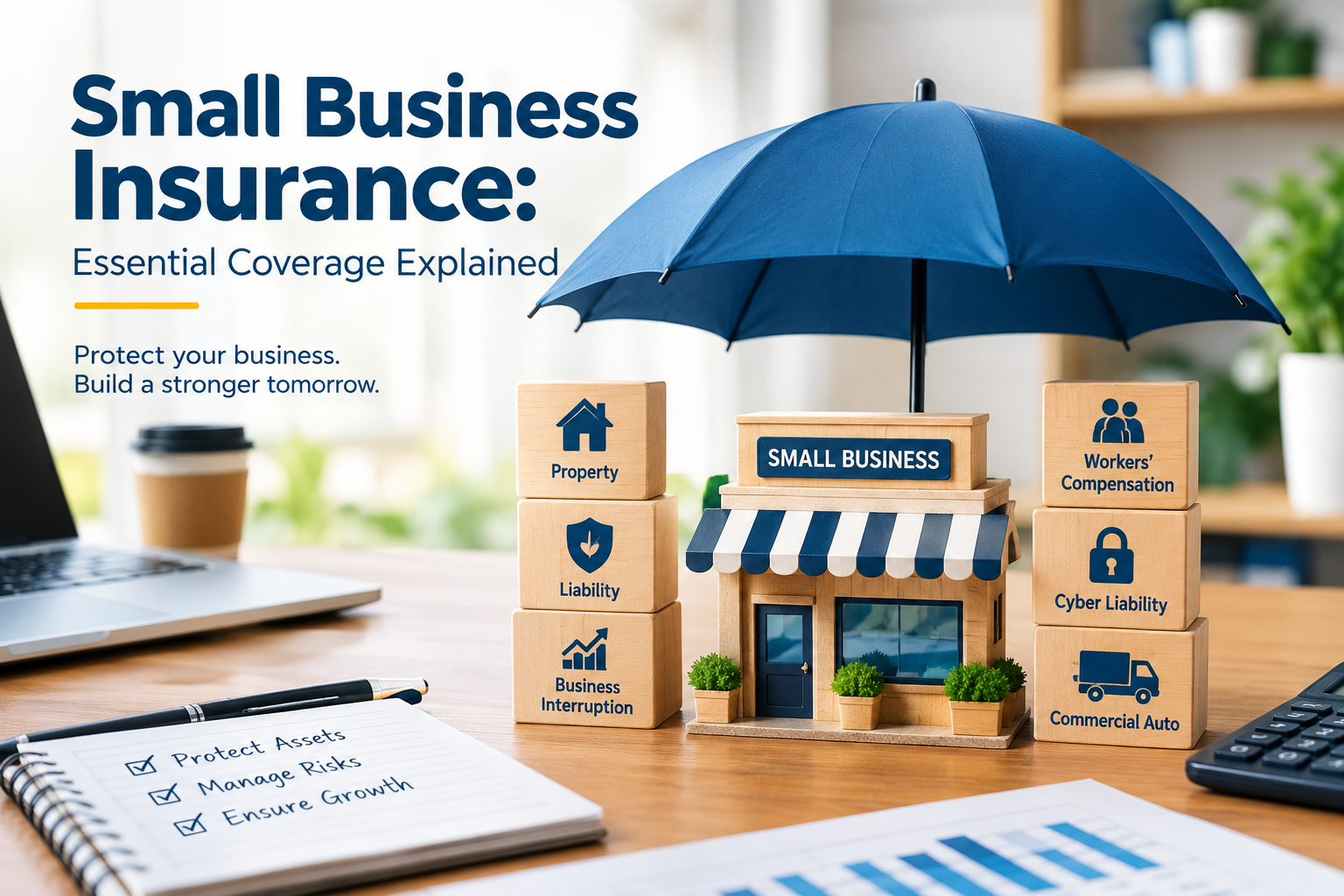
7 Essential Types of Small Business Insurance
The right insurance coverage depends on your business activities, assets, employees and location. Understanding the available policies can help you identify which risks deserve attention.
General Liability Insurance
General liability insurance protects businesses against certain third-party claims involving bodily injuries, property damage and personal or advertising injuries. For example, if a customer slips on a wet floor inside your shop and suffers an injury, this policy may help cover eligible medical expenses, legal defence costs or settlements.
This is one of the most useful types of Small Business Insurance for companies that interact with customers, suppliers, or members of the public. However, it generally does not cover employee injuries or professional mistakes.
Commercial Property Insurance
Commercial property insurance protects physical business assets against covered events such as fire, theft, vandalism, and certain weather-related damage. Covered property may include buildings, furniture, computers, machinery, stock and business equipment.
For example, a small bakery may need to replace damaged ovens and refrigerators after a covered fire. Property insurance can help with eligible replacement or repair expenses. When selecting Small Business Insurance for property protection, check whether the policy uses replacement cost or actual cash value. The difference can affect how much you receive after a claim.
Workers’ Compensation Insurance
Workers’ compensation insurance helps protect employees who experience work-related injuries or illnesses. Depending on local laws and policy terms, it may cover medical treatment, rehabilitation and part of an employee’s lost wages. For example, if a warehouse employee injures their back while lifting heavy boxes, workers’ compensation may help pay eligible medical expenses and wage benefits.
In some countries and regions, this coverage is legally required when a business employs workers. Requirements and exemptions vary, so check the rules in your jurisdiction before purchasing Small Business Insurance.
Professional Liability Insurance
Professional liability insurance, sometimes called errors and omissions insurance, protects certain service providers against claims involving professional mistakes, negligence or failure to deliver agreed services.
For example, a marketing consultant may provide incorrect advice that causes a client financial loss. The client could make a claim against the consultant. This coverage is particularly relevant for accountants, consultants, designers, technology professionals and other service-based businesses.
Business Interruption Insurance
Business interruption insurance helps replace certain lost income and cover eligible ongoing expenses when a covered event temporarily prevents normal business operations. Imagine a small restaurant closes for repairs after a covered fire. Although the restaurant cannot serve customers, it may still need to pay rent, utilities and other ongoing expenses.
Depending on the policy, Small Business Insurance with business interruption coverage may help manage these costs during the recovery period. However, ordinary business interruption coverage generally requires covered physical property damage. It does not automatically cover every reason a business might close.
Commercial Auto Insurance
Commercial auto insurance protects vehicles used for business activities against covered vehicle-related risks. For example, a delivery company may use vans to transport products to customers. If one of its vehicles causes an accident, the appropriate commercial policy may help cover eligible liability and vehicle damage expenses.
Personal car insurance may not cover every business use. Therefore, business owners should explain how their vehicles are used when arranging Small Business Insurance.
Cyber Liability Insurance
Cyber liability insurance helps businesses manage certain financial consequences of cyber incidents, such as data breaches, ransomware attacks and unauthorised access to customer information.
For example, an online store may experience a data breach that exposes customers’ personal details. Depending on the policy, cyber coverage may help pay for investigation, data recovery, legal assistance, and customer notification. This coverage is increasingly relevant to online retailers, digital agencies, consultants and businesses that store sensitive information.

What Is a Business Owner’s Policy (BOP)?
A Business Owner’s Policy, commonly called a BOP, combines several types of commercial coverage into one insurance package. It typically includes general liability, commercial property and business interruption protection. For eligible companies, Small Business Insurance through a BOP can simplify the purchasing process because multiple protections are included in one policy.
For example, a small retail shop may use a BOP to protect its inventory, equipment, and certain third-party liability risks. However, a BOP does not automatically cover every business risk. Workers’ compensation, professional liability, and commercial auto insurance generally require separate coverage. Always review the package details before purchasing.
The National Association of Insurance Commissioners explains the main features and limitations of business owner policies in its small business insurance guide.
How Much Does Small Business Insurance Cost?
There is no single price for Small Business Insurance because premiums depend on several factors. Insurers assess the likelihood and potential cost of claims before calculating a quote.
Common pricing factors include:
- Business type: Construction companies may face different risks from online consulting businesses.
- Location: Local weather conditions, crime rates, and legal requirements can affect premiums.
- Number of employees: A larger workforce may increase certain insurance risks.
- Coverage limits: Higher limits generally result in higher premiums.
- Claims history: Previous claims may influence an insurer’s assessment.
- Property and equipment: The value and condition of business assets can affect property coverage costs.
Instead of choosing the cheapest policy immediately, compare the coverage limits, deductibles, exclusions and benefits. A lower premium may come with less protection or higher out-of-pocket costs.
How to Choose the Right Small Business Insurance
Selecting suitable protection requires more than comparing prices. You should first understand the risks your company could realistically face. Start by reviewing your daily operations. Consider whether customers visit your premises, employees handle equipment, vehicles are used for deliveries, or your company stores customer information. Next, identify your most valuable assets. These may include buildings, computers, inventory, machinery, vehicles or intellectual property. Understanding their value can help you select appropriate coverage limits.
When comparing Small Business Insurance providers, request quotes from multiple licensed insurers or brokers. Review policy documents carefully and ask questions about exclusions, claim procedures, deductibles, and waiting periods. You should also check legal requirements. For example, UK businesses generally need employers’ liability insurance when people work for them, subject to applicable exceptions. Motor insurance is also required for business vehicle use. Other countries have different rules.
Finally, review your coverage at least once a year and whenever your company changes significantly. Hiring employees, purchasing expensive equipment, expanding operations, or moving premises can create new insurance needs.
Benefits and Limitations of Business Insurance
The biggest advantage of Small Business Insurance is financial risk management. Suitable policies can help businesses handle covered claims without paying every eligible expense from their own funds. Other potential benefits include improved business continuity, greater confidence when working with clients, and support in meeting certain contractual or legal obligations.
However, insurance also has limitations. Premiums can increase operating costs, some claims may be excluded, and policy limits may not cover the full value of a major loss. Claims can also take time to investigate and settle. For these reasons, insurance should form part of a wider risk management plan. Businesses should also maintain emergency savings, follow workplace safety procedures, secure digital information, and keep accurate financial records.

Frequently Asked Questions
Q1. Is Small Business Insurance necessary for every business?
Not every business needs the same policies, but most companies can benefit from suitable insurance. Legal requirements depend on the country, industry, workforce and business activities. Even home-based businesses and freelancers may face risks that require protection.
Q2. What is the most important insurance for a small business?
General liability insurance is a common starting point because it addresses certain third-party injury and property damage claims. However, the most important coverage depends on your operations. A consultant may need professional liability, while a retailer may prioritise property and product liability coverage.
Q3. Can I combine different business insurance policies?
Yes. Many insurers offer a Business Owner’s Policy that combines general liability, commercial property and business interruption coverage. Additional policies may be purchased separately to address risks that the package does not cover.
Q4. Does business insurance cover employee injuries?
Workers’ compensation insurance generally provides benefits for eligible work-related injuries and illnesses. Standard general liability insurance usually does not cover employee workplace injuries. Check your local employment and insurance laws to understand your responsibilities.
5. How often should I review my business insurance?
Review your policies at least annually and whenever your business experiences major changes. Hiring employees, purchasing equipment, increasing inventory or expanding into new markets may require additional protection or higher coverage limits.
Final Thoughts
Protecting your company against unexpected financial challenges is an important part of responsible business management. The right insurance can help cover eligible losses, manage liability claims, protect valuable assets, and support business recovery after certain unexpected events.
However, choosing suitable Small Business Insurance requires understanding your operations rather than simply purchasing the most popular policy. Consider your industry, employees, property, customers, and potential financial risks before making a decision.
Compare different insurers, read policy documents carefully, and seek advice from a qualified insurance professional when necessary. Remember that insurance requirements differ across countries, so always check local regulations. With the right preparation and appropriate Small Business Insurance coverage, you can build a stronger financial foundation and focus more confidently on growing your company.
1 thought on “Best Small Business Insurance: Essential Coverage Explained”