
Choosing the right insurance policy can be challenging, especially when several companies offer different prices, benefits, and coverage options. Whether you are shopping for health insurance, car insurance, life insurance, home insurance, or travel insurance, comparing policies carefully can help you find suitable protection without paying for benefits you do not need.
Many people make the mistake of choosing an insurance policy based only on its price. Although affordable premiums are important, a cheaper policy may provide less coverage, have higher deductibles, or exclude certain situations. Understanding these differences can help you make a more informed decision.
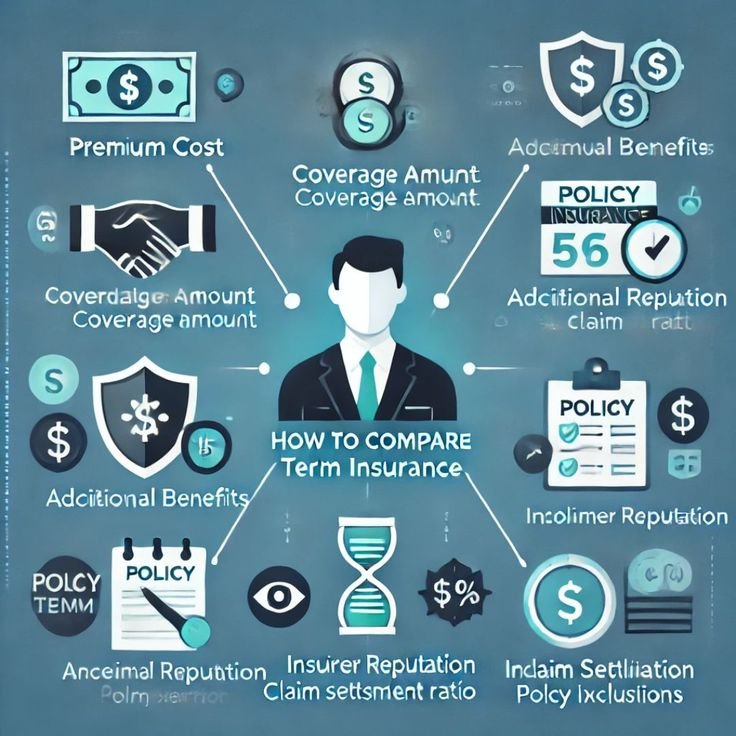
So, how can you compare different insurance policies effectively? By examining coverage, premiums, deductibles, exclusions, claim procedures, and the insurer’s reputation, you can identify which option best matches your needs and budget.
1. Understand Your Insurance Needs
Before comparing insurance policies, determine what you want the insurance to protect.
Different people have different insurance needs depending on their financial circumstances, family responsibilities, property, health, and lifestyle.
For example, someone buying a car may need motor insurance that satisfies applicable legal requirements while providing appropriate protection against accidents and other losses. A homeowner may prioritise coverage for property damage, while a parent might consider life insurance to provide financial support for dependants.
Start by asking yourself these questions:
- What do I want to protect?
- What risks could cause significant financial difficulties?
- How much coverage would I reasonably need?
- What can I afford to pay regularly?
- Do I already have similar coverage through another policy?
Answering these questions gives you a clear starting point and helps you avoid paying for unnecessary insurance benefits.
2. Compare the Coverage Offered
Coverage is one of the most important factors to examine when comparing insurance policies.
An insurance policy explains which events, losses, or expenses the insurer agrees to cover, subject to its terms and conditions. Two policies with similar prices may offer very different levels of protection.
For example, basic motor insurance may provide third-party liability coverage, while a more comprehensive policy may also cover damage to your own vehicle, depending on the contract.
Similarly, health insurance plans can differ in their coverage of hospital stays, prescription medicines, specialist consultations, and other medical services.
When reviewing coverage, consider:
- The risks and events included in the policy.
- The maximum amount the insurer will pay.
- Whether dependants or additional properties are covered.
- Whether optional benefits are available.
- Whether waiting periods or special conditions apply.
Read the policy documents carefully rather than relying entirely on advertising materials. A policy that offers broader protection may provide better value when its additional benefits match your needs.
3. Compare Insurance Premiums
An insurance premium is the amount you pay to maintain your coverage. Depending on the policy, payments may be monthly, quarterly, or annual.
When comparing insurance policies, obtain premium quotations from several insurers and check what each quotation includes.
For example, imagine you receive three annual home insurance quotations:
- Policy A costs $600 per year.
- Policy B costs $750 per year.
- Policy C costs $900 per year.
Policy A has the lowest premium, but that does not automatically make it the best option. If it provides substantially less coverage or has a much higher deductible, Policy B or C might offer better value.
Also, check whether the quoted premium includes taxes, administrative charges, or other fees. Ask whether the price is introductory and whether it could change at renewal.
The goal is to find a premium that fits your budget while providing adequate protection.
4. Check the Deductibles and Out-of-Pocket Costs
A deductible is the amount you must pay toward a covered loss before your insurance begins paying, according to the policy’s terms.
Some policies have low deductibles but higher premiums, while others offer lower premiums with higher deductibles.
For example, consider two hypothetical car insurance policies:
Policy A
- Annual premium: $1,200
- Deductible: $250
Policy B
- Annual premium: $950
- Deductible: $1,000
Policy B costs less each year, but you would have to contribute more toward a covered claim before the insurer pays.
Before choosing a policy, consider whether you could comfortably afford the deductible if an unexpected expense occurred.
Also, examine other potential out-of-pocket costs, such as copayments, coinsurance, coverage limits, and expenses that the policy does not cover.
Looking beyond the premium gives you a clearer picture of the policy’s potential financial impact.
5. Read the Exclusions and Limitations
Insurance exclusions identify situations, events, or losses that are not covered by the policy. These provisions can significantly affect the protection you receive.
For example, a home insurance policy may exclude certain types of flood damage, while a travel insurance policy may impose restrictions on particular activities or pre-existing medical conditions.
Health insurance plans may also have waiting periods, provider restrictions, or limits on specific treatments.
When comparing policies, look for:
- Excluded events or circumstances.
- Waiting periods before certain benefits become available.
- Limits on particular treatments, repairs, or expenses.
- Conditions that could invalidate a claim.
- Requirements for documentation or prior approval.
Do not assume that a policy covers every situation simply because it is advertised as comprehensive.
If a provision is unclear, ask the insurer or insurance agent to explain it in writing before purchasing the policy.
6. Examine the Claims Process
The claims process determines how you request payment or benefits when an insured event occurs.
A policy may offer attractive coverage, but a confusing or demanding claims procedure can create difficulties when you need assistance.
Find out how claims can be submitted, which documents are required, and whether claims can be managed online or through a mobile application.
You should also ask:
- How do I report an accident or loss?
- What evidence must I provide?
- Are there deadlines for reporting a claim?
- How are claims assessed?
- What happens if a claim is rejected?
- Is there an appeal or complaint procedure?
Claims processing times vary according to the insurer, the type of insurance, the complexity of the case, and applicable regulations. Avoid relying on promises of instant payment without checking the actual policy terms.
A clear and accessible claims process can make a meaningful difference when dealing with an unexpected loss.
7. Research the Insurance Company’s Reputation
The insurance company itself deserves as much attention as the policy.
Before purchasing coverage, investigate the insurer’s financial strength, licensing status, customer service, and complaint history.
Financial strength matters because insurers need sufficient resources to meet their obligations to policyholders. However, financial ratings should be considered alongside other factors rather than treated as a guarantee that every claim will be paid.
Look for information from recognised insurance regulators, independent financial rating agencies, and reliable consumer resources.
Customer reviews may also help you understand common experiences with communication, renewals, and claims. However, individual reviews do not always represent the experience of every policyholder.
Choose an insurer that operates legally in your jurisdiction and provides clear information about its products and responsibilities.
8. Compare Policy Limits and Optional Benefits
Policy limits establish the maximum amount an insurer will pay for particular covered losses, subject to the contract.
A policy with a low premium may have limits that are insufficient to cover a serious accident, expensive medical treatment, or substantial property damage.
For this reason, compare the maximum benefits available under each policy.
Also, examine optional benefits, sometimes called riders or add-ons. These may provide additional protection for specific circumstances.
For example, a motor insurance policy might offer roadside assistance, while a life insurance policy may offer additional benefits under certain conditions.
Determine whether these extras are genuinely useful. Paying for optional benefits that do not match your circumstances can increase costs without providing much practical value.
9. Consider the Policy’s Long-Term Value
Insurance should be evaluated over the period during which you expect to need protection, not just at the time of purchase.
A policy’s premium may increase at renewal, and its terms may change subject to the contract and applicable regulations.
Consider whether the coverage will remain suitable as your circumstances change.
For example, a growing family may need to review its life insurance coverage, while a homeowner may need to update property coverage after renovations.
Before purchasing a policy, ask how renewals work, whether premiums can change, and what circumstances might affect continued coverage.
Reviewing insurance periodically helps you avoid gaps in protection and identify whether your existing policy still meets your needs.
10. Use a Comparison Table to Make Your Decision
Comparing several policies side by side can make the differences easier to understand.
Create a simple table containing the information that matters most.
| Comparison Factor | Policy A | Policy B | Policy C |
|---|---|---|---|
| Annual premium | $600 | $750 | $900 |
| Coverage limits | Lower | Moderate | Higher |
| Deductible | $1,000 | $500 | $250 |
| Optional benefits | Limited | Several | Several |
| Exclusions | Review terms | Review terms | Review terms |
| Claims procedure | Check details | Check details | Check details |
| Insurer reputation | Research | Research | Research |
These figures are illustrative examples, not actual insurance quotations.
The table helps you identify differences without focusing entirely on price. Fill in the information from each insurer’s official quotation and policy documents before making your decision.
Conclusion
Comparing different insurance policies requires more than finding the cheapest premium. You should examine coverage, deductibles, exclusions, policy limits, claims procedures, and the insurance company’s reputation.
Start by identifying your needs and budget. Then obtain several quotations, review the policy documents, and compare the benefits and costs side by side.
Remember that the right policy is not necessarily the most expensive or the cheapest. It is the one that provides suitable protection at a cost you can afford, with terms you understand and an insurer you can reasonably trust.
Taking time to compare your options before purchasing insurance can help you avoid unexpected expenses, reduce gaps in coverage, and make more confident financial decisions.