Introduction
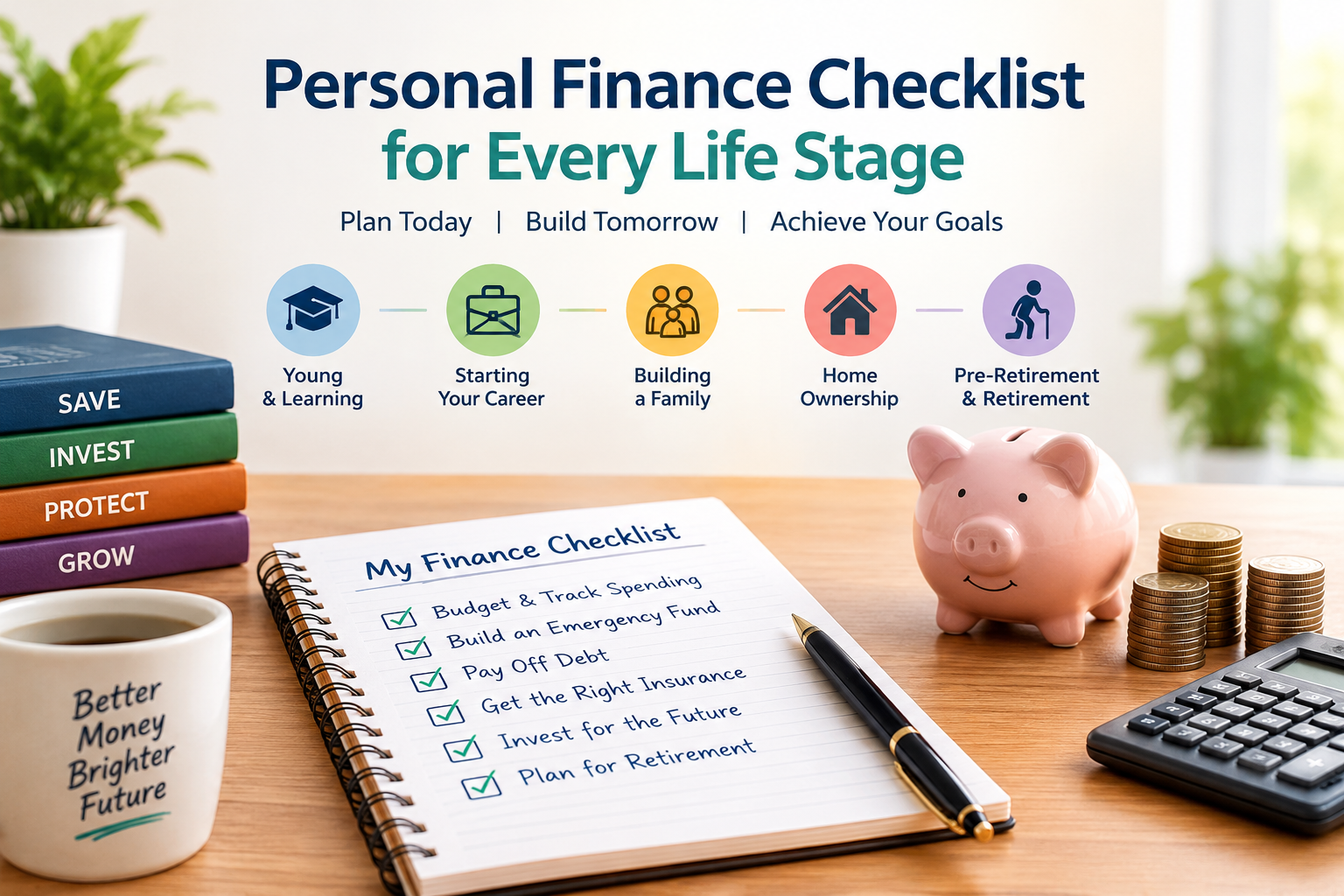
Managing money becomes easier when you know what to focus on today and how your decisions may affect your future. Your financial priorities can change as you finish your education, start working, build a family, buy a home, or prepare for retirement. A practical Finance Checklist helps you review your income, spending, savings, debt, insurance, and long-term goals at every stage of life.
You do not need a high income to begin improving your finance checklist. Small steps such as tracking expenses, saving regularly, paying bills on time, and reviewing your financial goals can make a meaningful difference. This Finance Checklist is designed for a global audience, so you can adapt the suggestions to your local banking system, currency, tax rules, and available financial products.

Why You Need a Personal Finance Checklist
A Finance Checklist helps you manage your money, set realistic goals and prepare for future expenses. It makes it easier to balance daily spending with long-term financial needs.
Understand Your Finances
List your monthly income, expenses, savings and debts to understand where your money goes.
Set Realistic Financial Goals
Focus on achievable goals such as building emergency savings, paying off debt or preparing for retirement.
Make Smarter Money Decisions
Review your spending and prioritize essential expenses before taking on new debt or investments.
Prepare for Unexpected Expenses
Build emergency savings and review suitable insurance coverage to help manage unexpected financial challenges.
Review Your Progress
Update your Finance Checklist regularly as your income, responsibilities and financial goals change.
In Your Teens and Early Twenties: Build Good Habits
Early adulthood is an ideal time to learn how money works. Even if you earn a small amount from a job, freelance work, or a part-time position, developing good habits now can support your future financial independence. Your Finance Checklist at this stage should include learning to prepare a simple budget, setting a savings goal, understanding bank fees, and avoiding unnecessary borrowing. If you use a credit card or another borrowing product, learn how interest and late-payment charges work before relying on it.
Try saving a fixed amount whenever you receive income. If you earn 500 units of your local currency and save 10%, you will set aside 50 units. The amount may seem small, but the habit can grow as your income increases. Also learn to identify financial scams. Be cautious of anyone promising guaranteed high returns or pressuring you to send money quickly.
In Your Twenties: Manage Your First Regular Income
When you begin earning regularly, it becomes easier to plan for rent, transport, food, education, and personal goals. Your next Finance Checklist should focus on creating a realistic budget and establishing a basic emergency fund. Record your essential expenses and compare them with your take-home income. Set aside money for savings as early as practical, but avoid creating a savings target that forces you to miss essential bills.
If your income changes each month, base your regular commitments on a conservative estimate rather than your best month. Build emergency savings in an accessible and suitably protected account. The amount you need depends on your essential expenses, job stability, dependants and available support. Some people gradually aim for several months of essential costs, but starting with a smaller achievable target is also useful.
Review any student loans or other debts. Understand the interest rate, payment schedule, and consequences of missed payments. Paying bills on time and keeping borrowing manageable can also help establish a positive credit history where credit reporting systems exist.
In Your Thirties: Protect Your Growing Responsibilities
Your thirties may bring marriage, children, homeownership, career changes, or increased family responsibilities. These changes can make financial planning more complex because you may need to balance present needs with long-term goals. Use your Finance Checklist to review your household budget, emergency savings, debt repayment, insurance needs and retirement contributions. If you share finances with a partner, discuss income, debts, savings goals and spending expectations openly.
Consider whether your family could manage financially if an income earner became unable to work or died. Depending on your circumstances, health, life, disability, home, or vehicle insurance may help protect against specific financial losses. Read exclusions, deductibles, coverage limits and claim requirements before choosing a policy. If you plan to buy a home, calculate the full cost rather than focusing only on the deposit or monthly loan payment. Maintenance, property taxes, insurance, and other local charges can affect affordability.

In Your Forties: Strengthen Your Long-Term Plan
By your forties, you may have higher earnings, more assets, and greater family commitments. This can be a useful time to assess whether your financial decisions are moving you towards your long-term goals. A midlife Finance Checklist should include reviewing retirement savings, outstanding loans, investment costs, insurance coverage, and education expenses if you support children. Check whether your current savings rate is realistic for your intended retirement age.
Investing can help build wealth over time, but returns are not guaranteed. Market values can fall, and different investments carry different risks. Diversification can reduce reliance on a single investment, although it cannot eliminate losses. Your investment choices should reflect your time horizon, financial capacity, and tolerance for risk.
If you have several debts, compare their interest rates and repayment conditions. Paying down high-interest debt may offer a more predictable financial benefit than investing the same money in a risky asset, although your emergency savings and other obligations also matter.
In Your Fifties: Prepare for Retirement
As retirement approaches, it becomes more important to estimate how much income you may need and where that income will come from. Consider public pensions, workplace retirement plans, personal savings, investments, and any other reliable sources available in your country. Your Finance Checklist should include estimating essential retirement expenses, checking pension eligibility, reviewing investment risk, and understanding when retirement benefits can begin. Also consider healthcare expenses and the possibility that you may live longer than expected.
Avoid making major investment changes based only on short-term market movements. Reducing risk may be appropriate as your goals approach, but selling investments without a clear plan can create other problems. Review fees, withdrawal rules, inflation, and potential taxes before making important decisions.
If you support adult children or older relatives, include these commitments in your retirement calculations. Helping family members can be important, but it should not leave you without a realistic plan for your own future needs.
In Your Sixties and Beyond: Manage Income and Protect Assets
Retirement does not mean that financial planning ends. Your income may become less predictable, while healthcare, housing, and daily living costs remain important. A retirement Finance Checklist should cover a sustainable withdrawal plan, regular bill payments, account security, insurance needs, and updated beneficiary details. Review your spending against your available income and adjust where necessary.
Keep enough accessible money for near-term expenses while considering how the rest of your assets may need to support you over many years. The right balance depends on your circumstances, expected income, and willingness to accept investment risk.
Be especially careful with unsolicited investment offers, requests for urgent transfers, and messages asking for passwords or verification codes. Never share sensitive banking information with someone whose identity you have not verified.
Your Annual Finance Checklist for Any Age
Life stages provide useful milestones, but certain financial tasks deserve attention every year. Schedule a review and check whether your financial plan still reflects your priorities.
Use this Finance Checklist to review the essentials:
- Income and spending: Update your budget and identify changes in regular expenses.
- Emergency savings: Check whether your savings remain suitable for your current responsibilities.
- Debt: Review balances, interest rates, payment dates, and repayment progress.
- Insurance: Confirm that your coverage, limits, and beneficiaries remain appropriate.
- Savings and investments: Check progress towards short-term and long-term goals.
- Retirement: Review contributions, expected benefits, and future living costs.
- Documents and security: Update important records and strengthen account security.
For example, if your monthly essential expenses are 1,500 units of your local currency, three months of those expenses would equal 4,500 units. This is an illustration, not a universal target. You may need more or less depending on your circumstances. The purpose of your Finance Checklist is not to complete every goal immediately. It is to identify the next useful step, monitor progress, and make informed changes as needed.

Frequently Asked Questions
Q1. What is a Finance Checklist?
A Finance Checklist is a practical list of money-related tasks covering budgeting, savings, debt, insurance, investing, and retirement planning. It helps you review your financial position and identify actions that support your goals.
Q2. How often should I review my personal finances?
Review your budget monthly and conduct a broader financial review at least once a year. Revisit your plan after major changes such as a new job, marriage, a child, a home purchase, or retirement.
Q3. How much money should I keep in an emergency fund?
There is no single amount that suits everyone. A common long-term goal is several months of essential living expenses, but you can start with a smaller amount and build gradually. Consider your income stability, dependants, debts, and access to support.
Q4. Should I pay off debt or invest first?
The answer depends on the debt’s interest rate, your emergency savings, and your goals. High-interest debt can be expensive, so paying it down may be a priority. However, consider minimum payments, employer retirement contributions, and essential cash reserves before deciding.
Q5. Can I use the same financial checklist at every age?
Yes, you can use the same basic framework, but your priorities should change with your circumstances. Younger adults may focus on budgeting and savings habits, while older adults may give more attention to retirement income, healthcare costs, and protecting assets.
Final Thoughts
Financial stability is built through consistent decisions rather than one perfect plan. A useful Finance Checklist helps you understand your current position, prepare for unexpected costs, manage debt, and work towards future goals without ignoring your present needs.
Start with the steps that matter most today. Track your spending, save what you reasonably can, review your debts, and learn about the financial products available in your country. Revisit your plan as your life changes.
The most effective Finance Checklist is one you can maintain and adapt. You do not need to achieve every financial goal at once. With regular reviews and realistic priorities, you can make better-informed decisions at every life stage.
4 thoughts on “Personal Finance Checklist for Every Life Stage”