Introduction
Choosing life insurance is an important step toward protecting your family’s financial future. However, with different policy types available, deciding which option fits your needs can feel confusing. Two common choices are term life insurance and whole life insurance. Both provide financial support to beneficiaries after the insured person’s death but they differ in cost, coverage duration, and savings features.
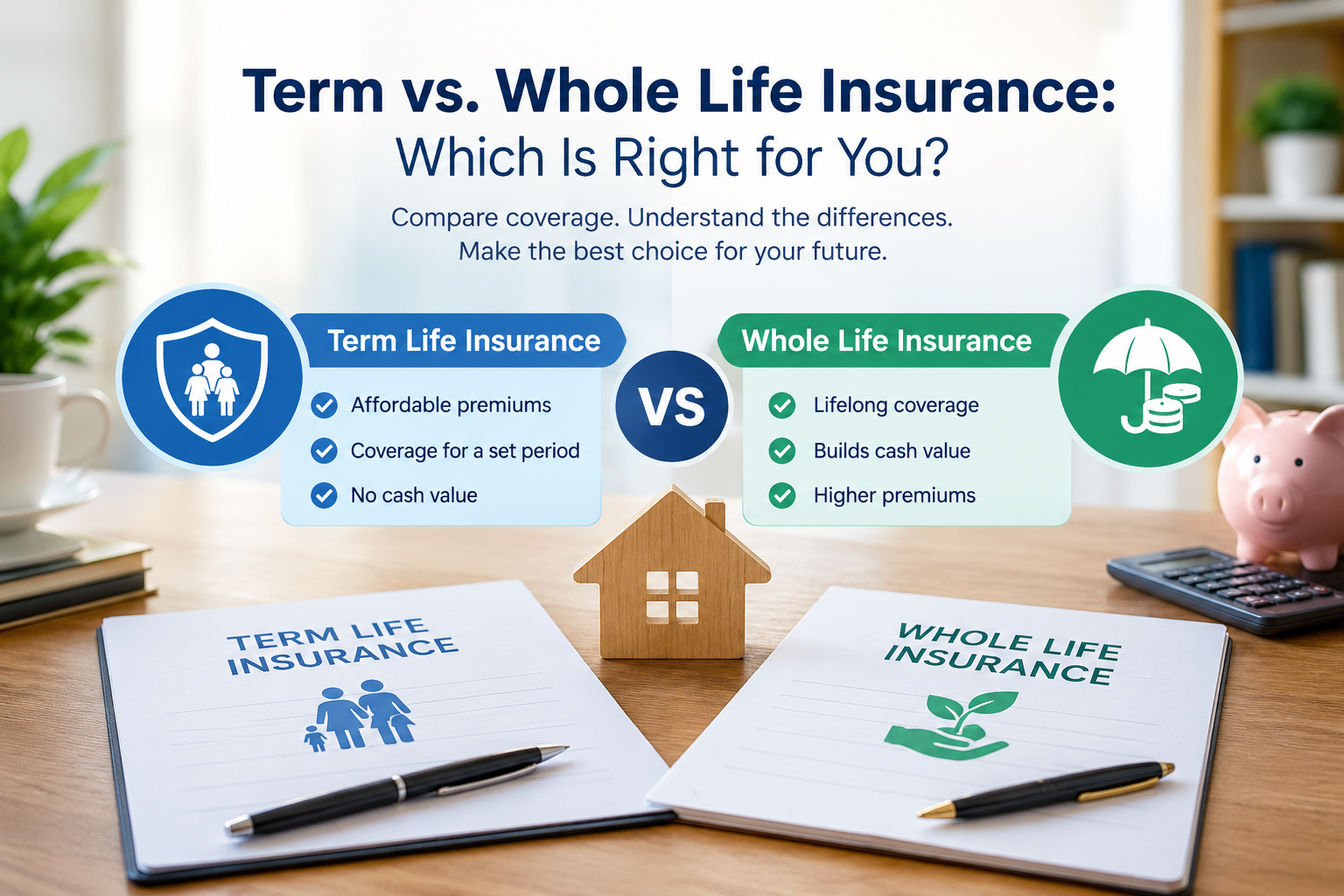
When comparing Term vs. Whole life insurance, the best choice depends on your financial responsibilities, budget, long-term goals, and the people who rely on your income. Term life insurance generally provides affordable protection for a fixed period, while whole life insurance offers lifelong coverage and a cash value component, provided the policy remains in force.
This guide explains the key differences, practical benefits, potential drawbacks and important factors to consider before choosing a policy.

What Is Term Life Insurance?
Term life insurance provides coverage for a specific period, such as 10, 20 or 30 years, depending on the insurer and policy. If the insured person dies while the policy is active, the insurer generally pays the agreed death benefit to the named beneficiaries, subject to the policy’s terms and exclusions.
For example, a parent might purchase a 20-year term policy to protect their children while they are financially dependent. If the parent dies during the coverage period, the benefit can help pay household expenses, education costs, outstanding debts and other essential bills.
Benefits of Term Life Insurance
One major advantage is affordability. Term policies typically offer substantial death benefit protection for a lower initial premium than comparable whole life policies. This can make them suitable for young families, homeowners, and people who need protection but have limited budgets.
Term insurance is also relatively straightforward. You choose a coverage amount and policy duration based on your needs. Some policies include a conversion option that allows you to switch to permanent coverage under specified conditions.
Potential Drawbacks
The main limitation is that coverage normally ends when the term expires unless the policy is renewed or another continuation option applies. If you outlive the policy, a standard term plan generally does not pay a maturity benefit or build cash value.
Renewing may become expensive because premiums can increase with age. If your health changes, obtaining a new policy may also become more difficult or costly. Review the renewal and conversion conditions before purchasing coverage.
What Is Whole Life Insurance?
Whole life insurance is a type of permanent life insurance designed to provide coverage throughout the insured person’s lifetime, provided the policy requirements are met. It typically includes a death benefit and a cash value component that accumulates over time according to the contract.
Part of the premium supports insurance costs and expenses, while another portion contributes to the policy’s cash value. Depending on the contract, the owner may be able to borrow against that value or surrender the policy for its available cash surrender value.
Benefits of Whole Life Insurance
The main advantage is long-term protection. Unlike a standard term policy, whole life insurance is not designed to expire after a predetermined number of years. This can be helpful for people who want to leave money to beneficiaries regardless of when they die.
Many traditional whole life policies offer level premiums and guaranteed minimum cash values under the contract. Some participating policies may also pay dividends but these are generally not guaranteed unless expressly stated in the policy. Whole life coverage may suit people with long-term financial obligations, estate planning needs, or a desire to leave a planned inheritance.
Potential Drawbacks
Whole life insurance usually costs significantly more than term coverage with a comparable death benefit. The higher premium can make it difficult to maintain the policy alongside other financial priorities, such as emergency savings, retirement contributions and debt repayment.
Cash value also takes time to accumulate. Early surrender may return less than the premiums paid, especially after policy charges and surrender fees. Borrowing against cash value can reduce the available death benefit or cause the policy to lapse if the loan and interest are not managed properly.
Term vs. Whole Life Insurance: Key Differences
The main differences involve how long coverage lasts, what you pay, and whether the policy builds cash value.
| Feature | Term Life Insurance | Whole Life Insurance |
|---|---|---|
| Coverage period | Fixed term | Designed for lifetime coverage |
| Premiums | Generally lower initially | Generally higher |
| Cash value | Usually none | Builds according to policy terms |
| Death benefit | Paid if death occurs during active coverage | Generally paid whenever death occurs while in force |
| Flexibility | May offer renewal or conversion options | May offer loans or surrender options |
| Best suited for | Temporary financial responsibilities | Lifelong protection and legacy goals |
These are general characteristics. Actual benefits, guarantees, exclusions, and costs vary by insurer, country and contract.

Which Policy Is More Affordable?
For many households, term insurance is the more affordable starting point. Its lower initial premiums can make it easier to obtain a death benefit large enough to protect dependents without placing excessive pressure on the monthly budget. Consider a hypothetical example. A parent wants life insurance to help replace income until their children become financially independent. A term policy may provide the necessary protection during those years at a manageable cost.
Whole life insurance could suit someone with a higher budget who wants permanent coverage and a cash value feature. However, paying more for a permanent policy is not automatically the better financial decision. The additional cost should be weighed against other priorities and the policy’s actual guarantees.
When comparing quotes, use the same coverage amount and applicant details wherever possible. Check premium schedules, exclusions, fees, renewal terms and the insurer’s financial strength rather than comparing prices alone.
How to Choose the Right Life Insurance Policy
Identify Your Financial Responsibilities
Calculate the income your family would need to replace, along with outstanding debts, childcare, education costs, and final expenses. Subtract resources that would realistically be available to your dependents. This gives you a starting point for estimating coverage needs.
Decide How Long You Need Protection
If your main concerns are a mortgage, dependent children, or income replacement during working years, term insurance may fit those temporary needs. If you want coverage for final expenses or a planned inheritance throughout your lifetime, whole life insurance may deserve consideration.
Review Your Budget
Choose a premium you can sustain over time. An expensive policy that forces you to miss payments may leave you without the protection you intended to provide. Consider whether you can maintain the premiums while also building emergency savings and preparing for retirement.
Compare Policy Guarantees
Ask the insurer for written details about guaranteed benefits, projected cash values, premium requirements, surrender charges, and any dividend assumptions. Distinguish guaranteed figures from illustrations based on future assumptions.
Check the Insurer and Local Rules
Insurance products and consumer protections differ by country. Review the insurer’s financial strength, claims process, licensing status, and policy conditions. An independent licensed adviser can help you compare suitable options in your market.
Can You Have Both Term and Whole Life Insurance?
Yes. Some people combine the two to balance affordability with lifelong protection. For example, a household might use term insurance for a large mortgage and income replacement while maintaining a smaller whole life policy for a long-term legacy goal.
This approach can provide flexibility, but it also means paying for two policies. Compare the combined premiums with your overall financial plan before deciding. A combination is useful only when both policies serve clear purposes and remain affordable.

Frequently Asked Questions
Q1. Is term life insurance better than whole life insurance?
Neither is best for everyone. Term insurance is generally suitable for affordable protection over a defined period, while whole life insurance may fit people who want lifelong coverage and cash value. Your budget and financial goals should guide the decision.
Q2. Does whole life insurance build cash value?
Yes. Whole life policies generally build cash value according to their contract terms. However, growth is not the same as a guaranteed investment return, and the amount available if you surrender the policy may be lower than the premiums you paid.
Q3. What happens when term life insurance expires?
Coverage generally ends unless the policy provides a renewal or conversion option that you exercise. You may need to buy new coverage, which could cost more because of your age or health. Check the contract before the expiration date.
Q4. Can I borrow money from a whole life insurance policy?
Some whole life policies allow loans against available cash value. Interest applies, and unpaid loans can reduce the death benefit or contribute to a policy lapse. Review the loan conditions with your insurer before borrowing.
Q5. Can I switch from term to whole life insurance?
Some term policies include a conversion option that allows you to change to eligible permanent coverage within a specified period. Conditions, available products, and deadlines vary. Check your policy to confirm whether conversion is available and how premiums may change.
Final Thoughts
The decision between term and whole life insurance comes down to the kind of protection you need and what you can comfortably afford. Term coverage can provide substantial protection during financially demanding years, while whole life insurance offers lifelong coverage and a cash value feature under the policy’s terms.
Before making a decision, compare several quotes, calculate your family’s likely financial needs, and review the contract’s guarantees and limitations. Avoid choosing a policy simply because it is cheaper or promises additional features. The right option is one that protects your beneficiaries, supports your long-term goals, and remains affordable throughout the period you need it.
2 thoughts on “Term vs. Whole Life Insurance: Which Is Right for You?”