Introduction
Managing money can feel difficult when bills arrive at different times and everyday expenses keep changing. You may earn enough to cover your needs but still wonder where your money goes each month. A clear budgeting plan can help you understand your spending and make better financial decisions.
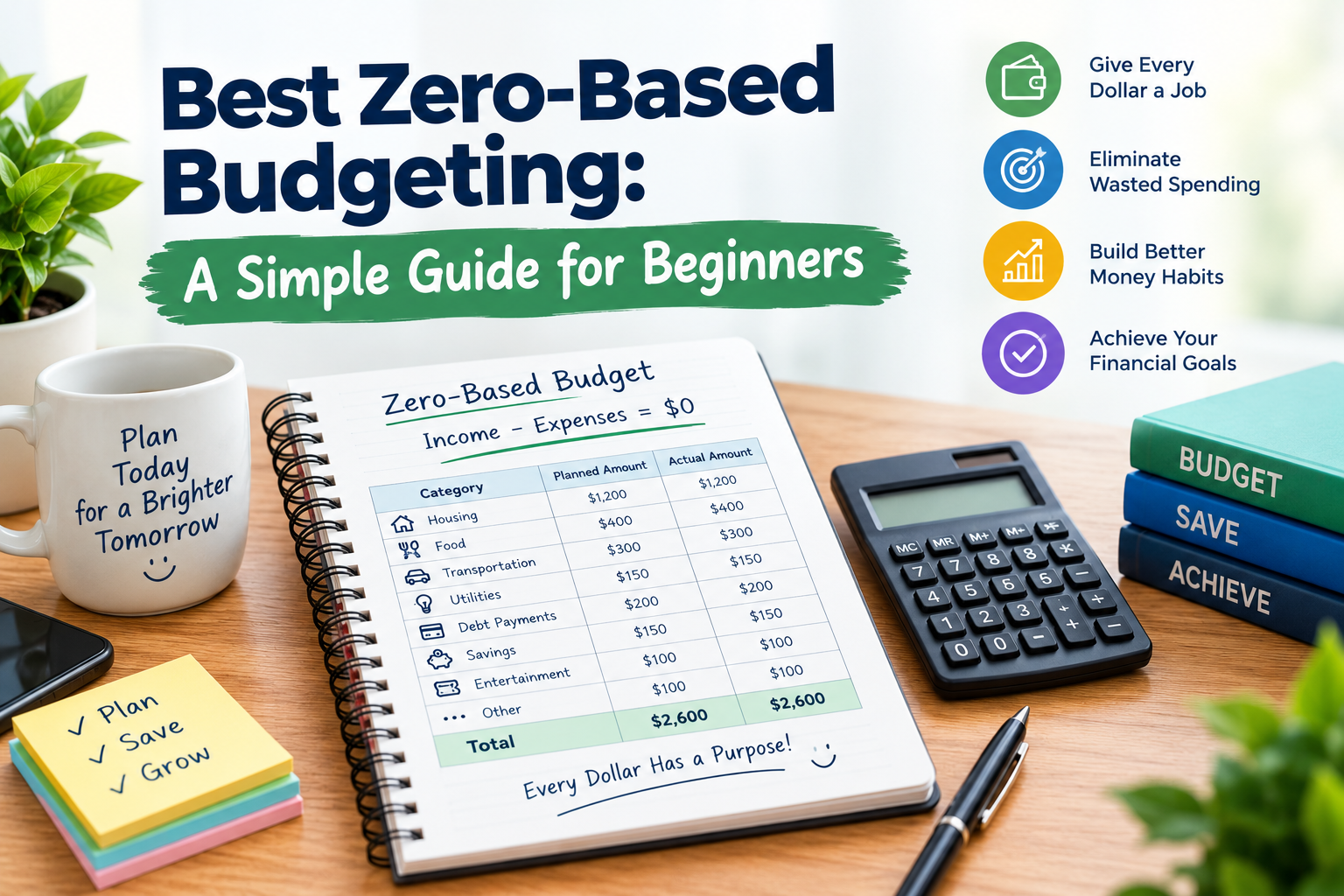
A zero-based budget gives every part of your income a specific purpose. Instead of spending first and saving whatever remains, you plan how to use your money before the month begins. Your plan includes essential expenses, personal spending, savings, investments and debt payments. The goal is to make your income minus all planned allocations equal zero.
This does not mean spending every dollar you earn. Money assigned to savings or an emergency fund also has a purpose. With regular reviews and realistic spending limits, this method can help beginners build better financial habits and work toward their goals.

What Is Zero-Based Budgeting?
Zero-based budgeting is a budgeting method in which you assign your available income to specific spending and financial goals until nothing remains unallocated. Each amount has a clear role, whether it pays rent, covers groceries, reduces debt or builds savings.
For example, suppose your monthly take-home income is $3,000. You plan $1,200 for housing, $400 for groceries, $250 for transportation, $300 for utilities and other bills, $250 for debt payments, $400 for savings and $200 for personal spending. These allocations total $3,000.
Your budget balances because your income minus your planned allocations equals zero. You have not spent all your money. Instead, you have made a plan for all of it. The method is useful for people who want a clearer picture of their finances. It can also help households identify unnecessary expenses and decide whether they can afford a new purchase before committing to it.
How to Create a Zero-Based Budget Step by Step
Calculate Your Monthly Income
Start by identifying how much money you actually have available to manage. If you receive a salary, use your take-home pay after payroll deductions. Include other dependable income sources, such as freelance payments, rental income or a regular side business.
If your earnings change each month, use a cautious estimate based on your recent income history rather than assuming you will earn your highest amount. You can create your plan around a conservative figure and adjust it when additional income arrives.
For example, a freelancer who earns between $2,000 and $3,200 monthly might build a basic plan around $2,000. Any additional income can then be assigned to overdue bills, savings, taxes or debt repayment.
List Your Expenses
Review bank statements, receipts, bills and payment records to understand where your money goes. Divide expenses into useful categories, including housing, food, utilities, transport, insurance, healthcare, subscriptions and entertainment. Separate fixed expenses from variable ones. Rent may stay the same each month, while grocery and electricity costs can change.
Also include irregular expenses such as annual insurance premiums, school fees, vehicle repairs and holiday spending. These less frequent costs are easy to overlook. Dividing an expected annual expense into monthly amounts can help you prepare for the payment before it arrives.
Set Savings and Debt Priorities
A successful zero-based budget should include more than everyday bills. Give your financial goals a place in the plan as well. You might set aside money for an emergency fund, retirement, education or a future home purchase. If you have debt, plan at least the required payments and consider allocating extra money to high-interest balances when practical.
For instance, someone who has $300 available after essential expenses could divide it between emergency savings and additional debt repayment. The right split depends on their interest rates, financial stability and immediate needs. If your income is limited, focus first on essential living costs and required payments. Do not set unrealistic savings targets that leave you unable to afford food, housing or necessary healthcare.
Assign Every Dollar a Job
Now add your income and planned allocations together. If the allocations are less than your income, assign the remaining money to a suitable category. If your expenses exceed your income, review optional spending and adjust the plan. A simple spreadsheet or notebook is enough to get started. You can also use a budgeting app if it makes tracking easier.
The purpose of a zero-based budget is not to create a perfect spreadsheet. It is to make deliberate choices about your money before you spend it.
Track Spending and Review the Plan
Record purchases throughout the month and compare actual spending with your planned amounts. If groceries cost more than expected, you may need to reduce another flexible category or update your plan.
Review your budget weekly if you are new to budgeting. At the end of the month, compare your estimates with actual spending and use that information to prepare the next plan. Your zero-based budget should change when your circumstances change. A new bill, a pay increase or an unexpected repair may require you to move money between categories.
A Practical Zero-Based Budget Example
Consider a household with $3,500 in monthly take-home income. The following example shows how a monthly plan might work.
| Budget category | Monthly amount |
|---|---|
| Housing | $1,100 |
| Groceries and household supplies | $450 |
| Utilities and phone | $250 |
| Transportation | $300 |
| Insurance and healthcare | $250 |
| Debt payments | $300 |
| Emergency savings | $350 |
| Retirement or long-term savings | $200 |
| Personal spending | $200 |
| Irregular expenses fund | $100 |
| Total allocations | $3,500 |
The figures are illustrative rather than recommended amounts. Actual costs depend on your location, household size, income and financial obligations. This zero-based budget allocates the full $3,500 without leaving money unassigned. It also includes savings and irregular expenses instead of treating them as afterthoughts.
If transportation costs rise by $50, the household can review flexible spending or another category and make an adjustment. The goal is to keep the plan realistic rather than relying on credit to cover every shortfall.

Benefits of Zero-Based Budgeting
One major benefit of a zero-based budget is visibility. You can see how much goes toward essential expenses, personal purchases and future goals. This makes it easier to identify spending patterns that do not match your priorities.
Another advantage is flexibility. You can change allocations each month to reflect school expenses, seasonal bills, changes in income or a new savings goal. Unlike a rigid spending plan, this approach allows you to adapt while keeping your overall finances organized. It can also encourage consistent saving and debt repayment. By including these goals before spending begins, you reduce the temptation to wait until the end of the month to see whether anything remains.
Risks and Common Mistakes to Avoid
Although a zero-based budget offers useful structure, it requires time and attention. Tracking every category may feel tiring, especially during the first few months. Starting with a manageable number of categories can make the process easier. Another common mistake is underestimating irregular expenses. If you forget vehicle maintenance, medical costs or annual bills, your plan may look balanced on paper but fail in practice.
Review previous spending records and leave room for realistic surprises. Avoid treating your budget as a reason to eliminate every enjoyable expense. A plan that leaves no room for occasional treats may be difficult to maintain. Include a reasonable personal spending allowance where your finances permit.
Finally, do not assume that a balanced budget guarantees financial security. Low income, high housing costs or unexpected emergencies can still create difficulties. If your necessary expenses exceed your available income, focus on essential needs, investigate eligible support and consider reputable financial guidance.
Zero-Based Budgeting vs. Other Budget Methods
The 50/30/20 method divides take-home income into broad groups: needs, wants and savings or debt repayment. It can be easier to maintain because it does not require detailed planning for every category. However, the suggested percentages may not fit everyone, especially people facing high living costs.
A zero-based budget offers more detailed control. You decide how much to allocate to each expense and goal rather than following broad percentage targets. This can be useful when you want to reduce spending or manage several financial priorities.
The pay-yourself-first method takes another approach by moving a planned amount into savings before using the rest for expenses. It can be simple for people who prefer automatic saving, although it still requires careful management of bills and spending. No single method works best for everyone. Choose a system you can maintain consistently and adjust it to your income and needs.

Frequently Asked Questions
Q1. Does a zero-based budget mean spending all your money?
No. It means assigning all available income to planned categories. Savings, investments, debt payments and money reserved for future expenses all count as allocations.
Q2. Is zero-based budgeting good for beginners?
Yes. Beginners can use a notebook, spreadsheet or budgeting app to track income and expenses. Starting with a few essential categories and reviewing them regularly can make the method easier to follow.
Q3. How often should I update my budget?
Review your spending at least weekly when starting out and prepare a fresh plan each month. Update it sooner if your income, bills or financial circumstances change significantly.
Q4. Can I use this method with an irregular income?
Yes. Estimate your income conservatively using recent earnings and prioritize essential costs. When extra money arrives, assign it to overdue obligations, taxes, savings or other goals instead of immediately increasing discretionary spending.
Q5. What should I do if my budget does not balance?
If your planned expenses exceed your income, review flexible costs and prioritize essential needs and required payments. If money remains unassigned, give it a specific purpose such as emergency savings or debt repayment. Never force the numbers to balance by ignoring necessary expenses.
Final Thoughts
A zero-based budget can help you take a more organized approach to everyday finances. By assigning income to expenses, savings and financial goals before spending begins, you can make informed decisions and better understand your priorities.
Start with your real income and actual expenses. Set achievable goals, include irregular bills and review your progress regularly. Your first plan does not need to be perfect. Each month gives you an opportunity to learn from your spending and make improvements.
The best budgeting method is one that fits your circumstances and remains practical over time. With consistency and realistic expectations, zero-based budgeting can become a useful part of your long-term financial routine.
1 thought on “Best Zero-Based Budgeting: A Simple Guide for Beginners”