Introduction
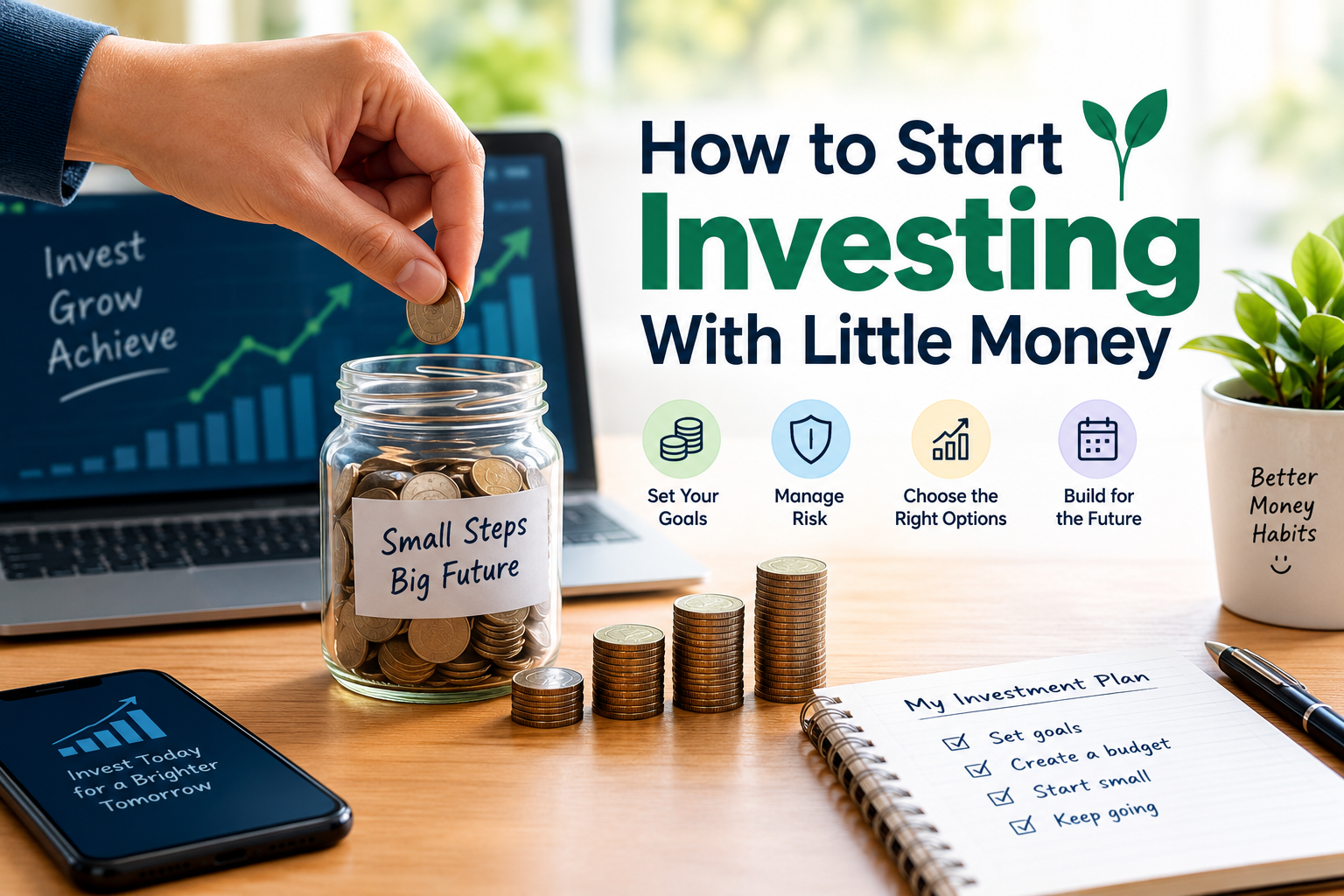
Starting your investment journey does not require a large bank balance. Even if you can only set aside a small amount each month, you can begin building good financial habits and work toward long-term goals. The key is to understand your options, control costs and choose investments that match your financial situation.
If you want to Start Investing but feel unsure about where to begin, you are not alone. Many beginners believe they need thousands of dollars before they can buy their first investment. However, some regulated investment platforms offer low minimum deposits or fractional shares, allowing eligible investors to begin with smaller amounts.
Before you Start Investing, remember that every investment carries risk. Prices can fall, returns are not guaranteed and fees can reduce your profits. A sensible plan helps you make informed decisions rather than chasing quick gains.

Set Your Financial Goals First
Before you Start Investing, decide what you want your money to achieve. Your goals could include retirement, buying a home, funding education, or building long-term wealth. A clear goal helps you decide how much to invest and how much risk you can reasonably accept.
For example, someone saving for retirement in 25 years may have more time to manage market fluctuations than someone who needs the same money for a home deposit next year. Short-term goals generally require more attention to protecting money from market losses.
Write down your goal, target amount, and expected timeframe. When you Start Investing with a clear purpose, it becomes easier to select suitable investments and stay consistent during uncertain markets.
Build a Financial Safety Net
Investing should not come at the expense of essential bills. Before you Start Investing, try to build an emergency fund that covers unexpected expenses, such as car repairs, medical costs, or temporary loss of income.
The amount you need depends on your circumstances. People with stable employment may need a different reserve from freelancers or households with irregular income. Keeping emergency money in an accessible savings account can help you avoid selling investments during a market downturn.
Consider paying off high-interest debt as well. Credit card interest can outweigh the potential gains from investments. If your budget is tight, you can focus on debt repayment and gradually prepare to Start Investing when your finances become more stable.
Begin With a Small Monthly Amount
You do not have to invest a large amount at once. Choose a contribution that fits comfortably within your budget, even if it is only $10, $25, or $50 per month, provided your chosen platform accepts that amount.
For example, investing $25 each month means contributing $300 over one year, before fees and any investment returns. If you increase the amount when your income grows, your contributions can build over time.
A useful way to Start Investing is to automate a manageable contribution after receiving your income. Regular investing can reduce the pressure to guess the best time to buy, although it does not guarantee a profit or protect you from falling markets.
Understand Your Main Investment Options
Before choosing where to Start Investing, learn how common investment types work and what risks they involve.
Stocks
Stocks represent ownership in a company. You may earn money if the share price rises or if the company pays dividends. However, prices can fall sharply and you may lose some or all of your investment.
Mutual Funds and Exchange-Traded Funds
Mutual funds and exchange-traded funds (ETFs) pool money from investors to hold a collection of assets. Broadly diversified funds can provide exposure to many companies through a single investment, which may be easier for beginners than choosing individual stocks.
However, not every fund is diversified. A fund focused on one industry can remain highly exposed to that sector. When you Start Investing, review the fund’s holdings, objectives, risks and fees.
Bonds
Bonds are investments in which an issuer borrows money and agrees to make payments under specified terms. Their risks depend on factors such as the issuer’s creditworthiness, interest rates and the bond’s maturity. Bond funds can also lose value.
The right choice depends on your goals, timeframe, and ability to handle losses. No single investment suits everyone.

Choose a Regulated Investment Platform
To Start Investing, you generally need access to a brokerage account or an investment service available in your country. Compare providers carefully instead of choosing the first app you see advertised online. Check whether the provider is authorized by the relevant financial regulator. Review account minimums, trading commissions, currency conversion charges, withdrawal rules, account protection arrangements and available investments.
Investors outside the United States should check local regulations, tax rules, and eligibility requirements before opening an overseas account. A platform that accepts customers in one country may not be available in another. Be cautious of anyone promising guaranteed profits or pressuring you to transfer money quickly. Legitimate start investing involves uncertainty, and no trustworthy provider can guarantee high market returns.
Look for Low-Cost Investment Options
Fees matter when you Start Investing with limited money. A fixed transaction fee can take a significant percentage of a small contribution, while ongoing fund expenses can reduce returns over many years. For example, a $2 transaction fee on a $20 purchase equals 10% of the amount invested before any market movement. If you make frequent small purchases, these charges can add up.
Compare expense ratios, account fees, inactivity charges and currency conversion costs. A low-cost diversified fund may be worth researching but never choose an investment based on fees alone. Its risk level, holdings, and suitability matter too. Fractional shares may let eligible investors buy a portion of a share instead of paying for a whole share. Availability and rules vary by provider, and fractional ownership does not remove investment risk.
Use Time and Compounding to Your Advantage
Compounding occurs when investment earnings remain invested and potentially generate further earnings. Over long periods, this can help your portfolio grow, although the actual outcome depends on returns, fees, taxes, and market conditions.
Imagine contributing $50 each month. Your total contributions would equal $600 after one year and $3,000 after five years, excluding fees and investment performance. Your account value could be higher or lower than these contribution totals.
When you Start Investing early, you give your money more time to potentially benefit from compounding. However, do not assume that a particular annual return is guaranteed. Markets can experience extended periods of poor performance, and inflation can reduce purchasing power.
Manage Risk and Avoid Common Mistakes
A beginner-friendly investment plan should focus on manageable risk rather than quick profits. Diversification spreads money across different investments, reducing reliance on any single company or asset. It cannot eliminate market risk or guarantee against losses. Avoid putting all your money into one stock because it is trending online. Be wary of borrowing to invest, trading too frequently, or investing money you will need soon.
Before you Start Investing, check the warning signs of scams, including guaranteed returns, secret trading strategies, fake testimonials, and pressure to act immediately. Verify investment professionals through the appropriate regulator and research opportunities independently.
Review your investments periodically, but avoid making rushed decisions whenever prices change. A long-term plan should reflect your financial goals and risk tolerance, not social media excitement.
Create a Simple Beginner Investment Plan
You can make a practical plan without complicated spreadsheets. First, list your essential expenses and debt payments. Next, decide how much you can afford to invest without affecting your emergency savings.
Then research regulated providers and compare suitable investment options. If you Start Investing with a small amount, a regular contribution to a diversified, low-cost fund may be one option to investigate, depending on your country and circumstances.
Finally, keep records of your contributions, fees, and investment performance. Review your plan when your income, family responsibilities, or goals change. Increase contributions only when your budget allows and seek qualified financial advice if your situation is complex.

Frequently Asked Questions
Q1. Can I start investing with just $10?
Possibly. Some providers offer low minimum deposits or fractional shares, while others require more money. Availability depends on your country, provider, and investment choice. Check fees carefully because charges can take a large percentage of a small contribution.
Q2. What is the best investment for beginners?
There is no universal best investment. Diversified mutual funds or ETFs may be worth researching because they can spread exposure across multiple assets. Your decision should depend on your goals, risk tolerance, timeframe, and local investment rules.
Q3. Is investing safe for beginners?
Investing is not risk-free. Stocks, funds, and bonds can lose value, and some investments carry greater risks than others. Learning the basics, diversifying, checking fees, and avoiding scams can help you make more informed decisions.
Q4. How much should I invest each month?
Start with an amount you can afford after covering essential expenses, debt payments, and emergency savings. This could be $10, $25, or another manageable amount. Increase contributions gradually if your financial situation improves.
Q5. How long should I keep my money invested?
It depends on your goal and the investment. Long-term goals may allow more time to manage market fluctuations, while money needed soon is generally better kept in more accessible, lower-risk options. Always consider the possibility of losses.
Final Thoughts
You do not need to be wealthy to begin building an investment habit. When you Start Investing with a realistic budget, understand the available options and pay attention to fees and risk, you can take practical steps toward your financial goals.
Focus on consistency rather than quick profits. Protect your emergency savings, research providers, diversify where appropriate, and avoid investments that promise unrealistic returns. Small contributions may make a difference over time but results are never guaranteed.
The most important step is to learn before committing your money. Build a plan that fits your circumstances and adjust it as your needs change.
2 thoughts on “How to Start Investing With Little Money”