Introduction
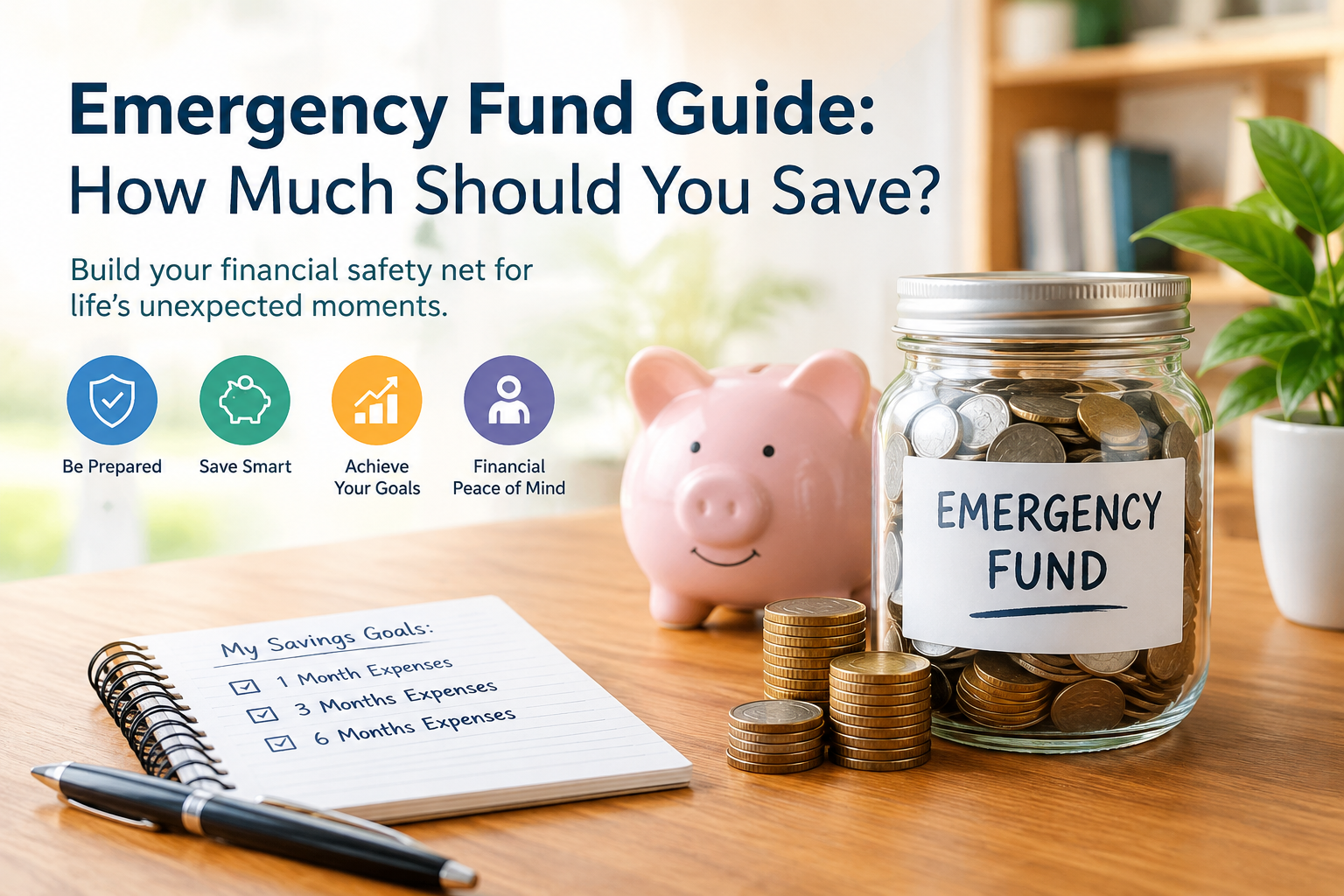
Unexpected expenses can affect anyone, regardless of income. A sudden car repair, medical bill, home repair, or loss of income can put pressure on your monthly budget. Without savings, you may need to borrow money or use a credit card to cover these costs. This is where an Emergency Fund becomes an important part of your financial plan.
An Emergency Fund is money set aside for unexpected expenses rather than regular spending. It can help you manage difficult situations without putting your other financial goals at risk. However, many people are unsure how much they should save or where they should keep their money.
The good news is that you do not need to save a large amount immediately. You can start with a small target and increase it over time. In this guide, you will learn how to calculate your savings goal, build your savings gradually, and choose a suitable place to keep your money.
What Is an Emergency Fund?
An Emergency Fund is a separate savings reserve for necessary expenses that you did not plan for. These expenses may include urgent medical treatment, essential home repairs, car breakdowns, or temporary unemployment.
For example, imagine that your monthly income covers your rent, groceries, utilities, transport, and other bills. If your car suddenly needs an expensive repair, your regular budget may not have enough room for it. Having an Emergency Fund can help you pay for the repair without missing essential bills or taking on unnecessary debt.
According to the Consumer Financial Protection Bureau, even a small amount of emergency savings can help people recover from unexpected financial difficulties.
How Much Should You Save in an Emergency Fund?
A common financial guideline is to save enough to cover three to six months of essential living expenses. This is a useful starting point rather than a strict rule. Your ideal Emergency Fund depends on your income stability, household responsibilities, insurance coverage, and access to other financial support.
Start by calculating your essential monthly expenses. Include housing, food, utilities, transportation, necessary healthcare, insurance premiums and minimum debt payments. Exclude optional spending such as entertainment, holidays and nonessential shopping.
Here is a simple example:
| Essential monthly expenses | Amount |
|---|---|
| Rent or mortgage | $900 |
| Groceries | $350 |
| Utilities | $150 |
| Transportation | $200 |
| Healthcare and insurance | $200 |
| Minimum debt payments | $100 |
| Total monthly expenses | $1,900 |
Based on these figures, your savings targets would be:
- One month of expenses: $1,900
- Three months of expenses: $5,700
- Six months of expenses: $11,400
If you are starting from zero, aim for a smaller initial target before working toward a larger Emergency Fund. The MoneyHelper emergency savings guide also recommends considering several months of essential outgoings when planning your savings.
Who Needs a Larger Emergency Fund?
You may need a larger financial cushion if you are self-employed, work on short-term contracts, support children or other family members, or have an irregular income. People who face high healthcare costs or live in areas vulnerable to natural disasters may also need additional savings.
On the other hand, someone with stable employment, low essential expenses, and reliable support may feel comfortable building savings more gradually. Choose a target that reflects your circumstances rather than copying someone else’s savings goal.
How to Build Your Emergency Fund Step by Step
Set a Realistic First Goal
Saving several months of expenses can feel difficult when you are starting with little money. Instead of focusing on the final target, choose an amount you can reach within a reasonable period.
For example, your first goal might be $500 or the equivalent in your local currency. After reaching it, work toward one month of essential expenses and then gradually increase your target. Your Emergency Fund does not need to be complete before it becomes useful. Even a modest balance can help cover an unexpected bill.
Review Your Monthly Budget
Look at your recent bank statements and identify spending you can reduce without affecting essential needs. You might cancel an unused subscription, compare utility providers, prepare more meals at home, or reduce unnecessary shopping.
Avoid cutting important expenses such as necessary medication or suitable insurance just to save more quickly. The goal is to create a sustainable savings habit.
Automate Your Savings
Set up a regular transfer from your main account to a separate savings account. You could arrange the transfer for payday so that you save before spending money on nonessential purchases.
For example, saving $25 every week would add up to $1,300 over 52 weeks, excluding interest and fees. If that amount is too high, start with $5 or $10 a week and increase it when your budget allows. The FDIC’s savings guidance explains how regular transfers can help people build savings over time.
Use Extra Money Wisely
Bonuses, tax refunds, gifts, and income from occasional work can help you reach your savings goal faster. Consider directing part of this extra money toward your Emergency Fund while keeping enough available for immediate needs and other financial priorities.
You do not need to put every extra dollar into savings. A balanced plan is often easier to maintain over the long term.
Review Your Progress Regularly
Check your balance every month and review your target when your circumstances change. A new home, a child, higher living costs or a change in employment may affect how much you need.
If you use some savings during an emergency, rebuild the balance when your budget allows. Replenishing the money helps maintain your financial protection for future expenses.
Where Should You Keep Your Emergency Fund?
Your savings should be accessible when an unexpected expense occurs. For many people, a separate savings account with low fees and easy withdrawals is a suitable option. Compare the account’s interest rate, withdrawal rules, minimum balance requirements, and any monthly charges. An account that pays interest can help your savings grow, but easy access and security are usually more important than chasing the highest possible return.
Check the deposit protection rules in your country. For example, eligible deposits at insured banks in the United States may receive FDIC protection within applicable limits. Other countries have their own deposit guarantee schemes.
Avoid keeping your entire Emergency Fund in volatile investments such as individual stocks or cryptocurrency. Their values can fall when you need the money most. Fixed-term deposits and certificates of deposit may also have early withdrawal restrictions or penalties, so review the terms before using them for emergency savings.
Benefits and Limitations of Emergency Savings
An Emergency Fund can reduce financial stress and help you handle unexpected bills without relying entirely on borrowing. It can also protect other goals, such as retirement savings or a future home purchase, from being disrupted by short-term problems.
However, building a large reserve takes time, and keeping too much money in a low-interest account may reduce its purchasing power when inflation rises. There is also an opportunity cost because money held in cash may earn less than long-term investments.
You can manage these trade-offs by setting a realistic target, keeping the money accessible, and reviewing your savings as your needs change. If you have expensive debt, consider balancing debt repayment with a starter savings reserve rather than directing all your spare money toward one goal.
5 Frequently Asked Questions
Q1. How much should I have in an Emergency Fund?
A common target is three to six months of essential living expenses. Start with a smaller amount if necessary and adjust your target according to your income stability, household needs and financial responsibilities.
Q2. Can I build an Emergency Fund on a low income?
Yes. Begin with an amount that fits your budget, even if it is only a few dollars each week. Regular contributions and gradual increases can help you build savings without putting essential bills at risk.
Q3. Should I save or pay off debt first?
The right approach depends on the type of debt, its interest rate and your immediate needs. Keeping a small cash reserve can help you avoid borrowing for every unexpected bill. After that, consider prioritizing expensive debt while continuing manageable savings contributions.
Q4. Where is the safest place to keep emergency savings?
A separate, accessible savings account at a reputable institution is often a practical choice. Check account fees, withdrawal rules and applicable deposit protection. Avoid relying on investments that could lose value when you need the money.
Q5. When should I use my Emergency Fund?
Use it for necessary, unexpected expenses, such as urgent repairs, essential medical bills or a sudden loss of income. Planned purchases, holidays and routine bills should normally come from your regular budget or separate savings goals.
Final Thoughts
Building an Emergency Fund is one of the most practical steps you can take toward greater financial stability. It gives you a reserve for unexpected costs and can reduce your dependence on credit cards or loans when life does not go according to plan.
Start by calculating your essential monthly expenses and choosing a manageable first target. Save regularly, keep the money accessible and increase your balance as your financial situation improves. You do not need to reach your full goal overnight.
The most important step is to begin with what you can afford and remain consistent. Over time, your savings can become a valuable safety net that supports your wider financial goals.
2 thoughts on “Emergency Fund Guide: How Much Should You Save?”