Introduction
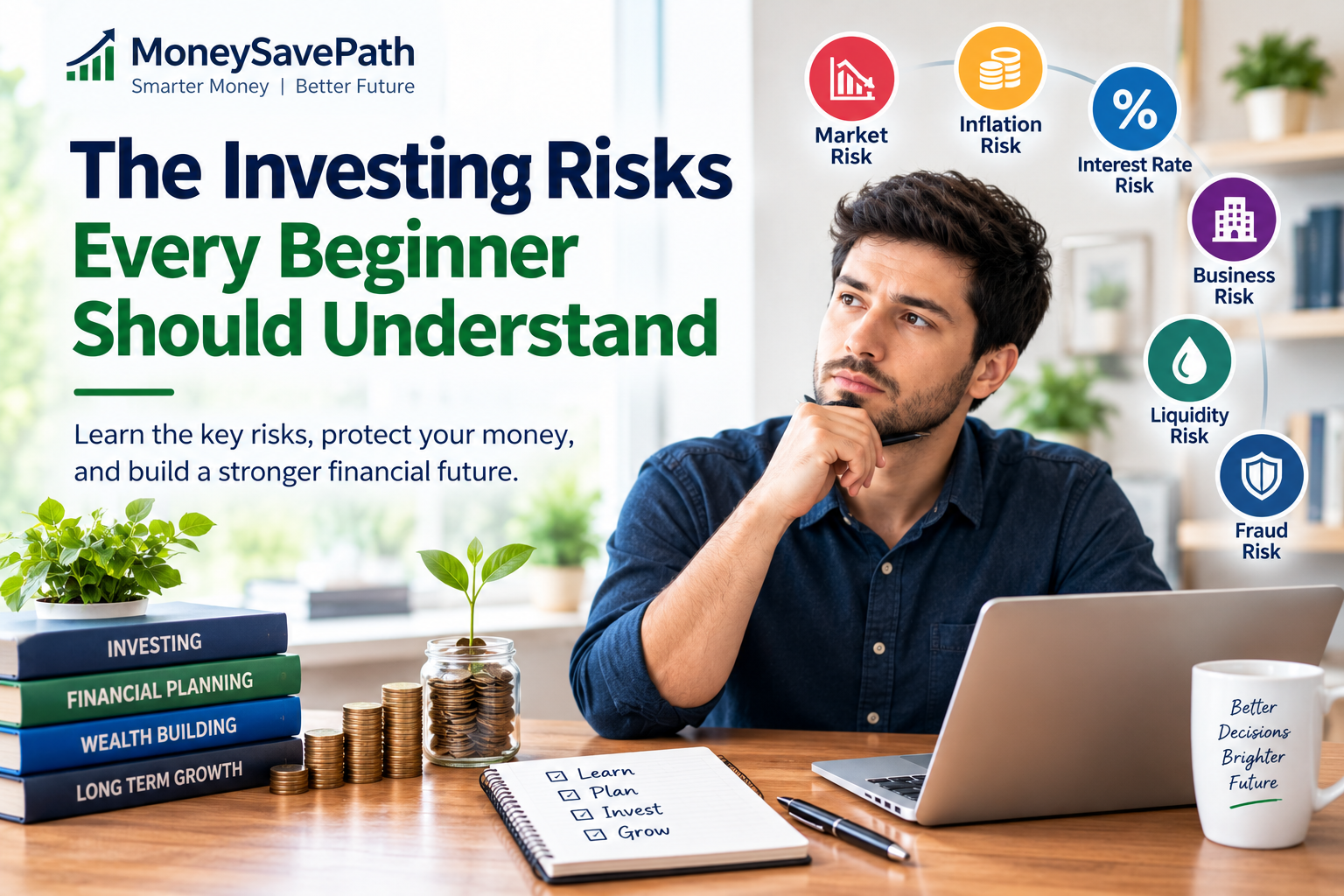
Investing can help you build wealth over time, prepare for retirement, and work toward important financial goals. However, every investment comes with some uncertainty. Understanding Investing Risks before putting your money into stocks, bonds, mutual funds, exchange-traded funds (ETFs) or other assets can help you make more informed financial decisions.
Many beginners focus mainly on potential profits without considering what could happen if an investment loses value. Market changes, inflation, rising interest rates, unexpected expenses and poor investment choices can all affect your financial future. Learning about these challenges does not mean you should avoid investing risks. Instead, it helps you understand the possible downsides and choose investments that match your goals and financial situation.
This guide explains the main Investing Risks beginners should know, provides practical examples and shares sensible ways to manage uncertainty. If you are starting with a small amount or planning for long-term growth, understanding these risks is an important first step.

What Are Investing Risks?
Investing Risks are the possibilities of losing money, receiving lower returns than expected or being unable to access your money when needed. Different investments carry different levels and types of risk. For example, individual stocks can experience large price changes, while bonds can lose value when interest rates rise or an issuer struggles to repay its debt.
Generally, investments with higher potential returns may also expose you to greater potential losses. However, taking more risk does not guarantee earning more money. Your investment choices should reflect your financial goals, time horizon and ability to handle losses.
Market Risk: When Investment Prices Fall
Market risk is one of the most common Investing Risks. It occurs when the overall financial market declines because of economic uncertainty, political events, changing interest rates or lower investor confidence. For example, imagine you invest $1,000 in a stock market fund. If its value falls by 15%, your investment would be worth $850 before fees or other costs. You have an unrealized loss of $150 if you continue holding it. If you sell at that price, the loss becomes realized.
Market declines can be uncomfortable, particularly for new investors who expect their money to grow steadily. However, markets do not move upward every year and past performance cannot guarantee future results.
How to manage this risk: Set clear investment goals, avoid making decisions based only on short-term market movements and choose an investment mix that suits your time horizon and risk tolerance.
Volatility Risk: Unexpected Price Changes
Volatility refers to how much and how quickly an investment’s price changes. A highly volatile asset may rise sharply one week and fall just as quickly the next. This is another important area of Investing Risks because beginners may panic when prices decline. They might sell an investment at a loss or purchase an asset after its price has already increased substantially.
Consider someone who buys a popular company’s shares after seeing several positive online posts. If the company later reports weaker earnings, the share price may fall. The investor could lose money despite believing the purchase was a good opportunity.
How to manage this risk: Understand why an investment’s price may change before buying it. Avoid investing based on excitement, rumors or social media recommendations alone. Regular contributions and a long-term plan may help reduce the temptation to react to every price movement, although they cannot eliminate losses.
Inflation Risk: Losing Purchasing Power
Inflation reduces the amount of goods and services your money can buy over time. Even when your savings or investments grow in value, they may not keep pace with rising prices. Suppose your investment earns a 3% return over a year while inflation is 4%. Your approximate return after inflation is negative 1%, before taxes and fees. Your account balance has increased, but its purchasing power has declined.
These Investing Risks matter particularly to people saving for retirement or other goals many years away. Keeping all your money in low-return assets may feel safe, but the purchasing power of that money can gradually weaken.
How to manage this risk: Consider a diversified investment strategy designed for your time horizon. Some assets may offer growth potential over the long term, but none can guarantee that your returns will exceed inflation.
Interest Rate Risk: Changes That Affect Investments
Interest rate changes can influence bond prices, borrowing costs, and the value of other financial assets. Existing bonds generally become less attractive when new bonds offer higher interest rates, which can push their market prices down. For example, imagine you own a bond paying a fixed 3% annual interest rate. If similar new bonds begin offering 5%, buyers may be unwilling to pay the same price for your lower-paying bond. You might need to sell it at a discount.
Interest rate movements are among the Investing Risks that beginners may overlook when choosing bonds or bond funds. Bond funds can fluctuate in value even when they hold a range of bonds.
How to manage this risk: Understand the bond’s maturity, interest rate, credit quality and any early-sale implications. Match bond investments to your financial goals instead of assuming that all bonds maintain a stable market value.

Business and Credit Risk: When Issuers Struggle
Business risk affects investments in individual companies. A company may lose customers, face rising costs, experience management problems or become less competitive. These problems can reduce its profits and share price. Credit risk is the possibility that a borrower will fail to make required payments. This can affect corporate bonds and other debt investments. If an issuer defaults, investors may receive less than expected or lose some of their money.
For example, an investor who buys bonds from a financially weak company may receive a higher advertised interest rate. However, that higher rate may reflect the greater chance that the company will struggle to repay its debt.
How to manage this risk: Research the financial health of companies and bond issuers. Review available financial statements, credit ratings, and relevant disclosures. Avoid assuming that a high yield automatically makes an investment attractive.
Liquidity Risk: When You Cannot Sell Easily
Liquidity describes how easily you can sell an investment and access your money without a substantial loss in value. Listed shares and many exchange-traded funds can often be sold relatively quickly, while property, private investments, and some specialized assets may take much longer to sell.
Liquidity is an important part of Investing Risks because you may need money unexpectedly. Imagine investing your emergency savings in a property that takes several months to sell. If you face a medical bill or lose your job, accessing that money could be difficult.
How to manage this risk: Keep emergency savings separate from investments that may be difficult to sell. Before investing risks, check withdrawal restrictions, trading activity, transaction costs and any penalties for accessing your money early.
Concentration Risk: Putting Too Much in One Investment
Concentration risk occurs when too much of your money depends on one company, industry, asset class or market. If that investment performs poorly, a large portion of your portfolio may suffer. For example, a worker might invest most of their savings in shares of their employer. If the business struggles, the worker could face both a falling investment balance and uncertainty about their job.
Diversification can reduce some Investing Risks by spreading money across different investments that do not always respond to events in the same way. However, diversification cannot guarantee profits or prevent losses during a broad market downturn.
How to manage this risk: Consider spreading investments across suitable asset classes, industries, regions, and issuers. Review the holdings inside funds as well, because owning several funds does not necessarily mean you are well diversified if they hold many of the same assets.
Fraud and Speculative Investment Risk
Investment scams often promise unusually high profits with little or no risk. Scammers may use fake testimonials, urgent messages, celebrity endorsements or complicated explanations to persuade people to transfer money.
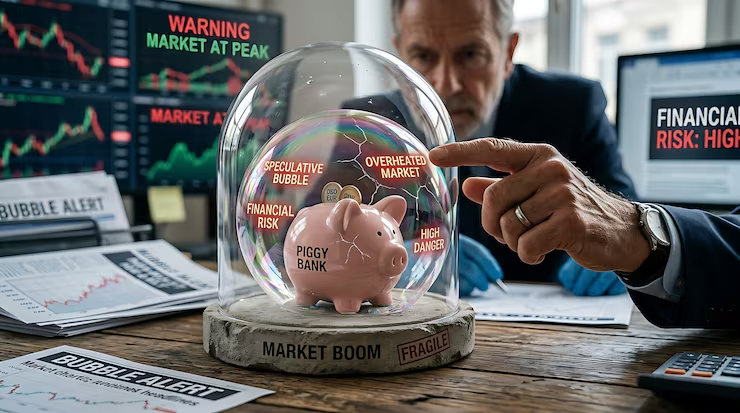
Speculative assets, including some crypto assets, can also experience extreme price movements. Their value may depend heavily on market sentiment, and investors may face additional risks involving trading platforms, cybersecurity, regulation and liquidity. These Investing Risks can be especially serious for beginners who lack experience evaluating investments.
How to manage this risk: Check whether financial firms and professionals are authorized by the relevant regulator in your country. Research the investment independently, understand how it generates returns, and be suspicious of guaranteed-profit claims. Never invest money you cannot afford to lose in highly speculative assets.
How Beginners Can Manage Investing Risks
You cannot eliminate every investment risk, but you can take practical steps to manage your exposure. Start by setting a clear financial goal. Money intended for a near-term expense generally should not be exposed to the same level of market uncertainty as money intended for a retirement goal decades away. Build an emergency fund before committing money to volatile or difficult-to-sell investments. This can reduce the chance that an unexpected bill forces you to sell assets during a market decline.
Next, learn about asset allocation and diversification. A suitable mix of stocks, bonds, cash, and other investments depends on your personal circumstances, local investment options and time horizon. Review fees because even small recurring costs can reduce long-term returns.
Finally, avoid borrowing to invest unless you fully understand the additional risks. Leverage can magnify losses as well as gains. Review your portfolio periodically and seek qualified financial advice when your circumstances or goals require it.
Benefits of Understanding Investing Risks
Learning about Investing Risks can help you compare investment choices more carefully, recognize unrealistic promises, and avoid decisions driven by fear or excitement. It also helps you understand the balance between potential growth, financial security, and access to your money.
Investing risks still offers potential benefits, including capital growth, income and an opportunity to build wealth over time. The aim is not to avoid all uncertainty but to make informed choices that fit your circumstances.
For example, a beginner investing risks for retirement may accept short-term market fluctuations in pursuit of long-term growth. Someone saving for a home deposit next year may prefer lower-volatility options because a market decline could delay their purchase. Neither approach is automatically right for everyone; the appropriate choice depends on the goal and the investor’s ability to accept losses.
Frequently Asked Questions
Q1. What are the biggest Investing Risks for beginners?
Common risks include market declines, price volatility, inflation, interest rate changes, business failure, credit defaults, limited liquidity, concentration, and investment fraud. The level of risk varies by investment type.
Q2. Can I lose all my money when investing?
Yes. Some investments, particularly individual companies or speculative assets, can lose most or all of their value. Certain leveraged products may expose investors to losses beyond their initial investment. Understand the terms before investing.
Q3. Does diversification eliminate Investing Risks?
No. Diversification can reduce the impact of poor performance in one investment, but it cannot eliminate every risk. A widespread market decline can affect many investments at the same time.
Q4. Are bonds safer than stocks?
Bonds are often less volatile than individual stocks, but they are not risk-free. Their prices can fall when interest rates rise, and issuers may fail to make payments. The risks depend on the bond and its issuer.
Q5. How can beginners start investing more safely?
Set a clear goal, build emergency savings, research investments, compare fees, diversify appropriately, and avoid products you do not understand. Consider consulting a qualified financial professional for advice suited to your situation.
Final Thoughts
Understanding Investing Risks is an essential part of becoming a confident investor. Market changes, inflation, interest rates, credit problems, liquidity limits, and fraud can all affect your results but careful planning can help you make more informed choices.
Focus on your financial goals, understand what you are buying, and choose a level of risk you can realistically afford. Diversification, sensible time horizons, emergency savings and independent research can improve your approach, although they cannot guarantee profits.
Investing is not about finding a risk-free way to grow money. It is about understanding the possible outcomes and making decisions that support your long-term financial well-being.
1 thought on “The Investing Risks Every Beginner Should Understand”