Introduction
The 50/30/20 budgeting method is a simple way to divide your take-home income between essential expenses, personal spending, and savings. It provides a starting point for managing money without tracking every small purchase. The Consumer Financial Protection Bureau (CFPB) also presents this approach as a common budgeting guideline while noting that people can adapt it to their circumstances.
The key to making this method work is understanding how to apply it to your real financial situation. A useful Budgeting Rule should help you pay your bills, enjoy your money, and prepare for future expenses without creating unnecessary pressure. If you earn a regular salary, work independently, or manage a household, you can adjust this approach to suit your needs.
In this guide, you will learn how the 50/30/20 method works, how to calculate your monthly spending limits, and how to adapt the plan when your income or expenses change.

What Is the 50/30/20 Budgeting Rule?
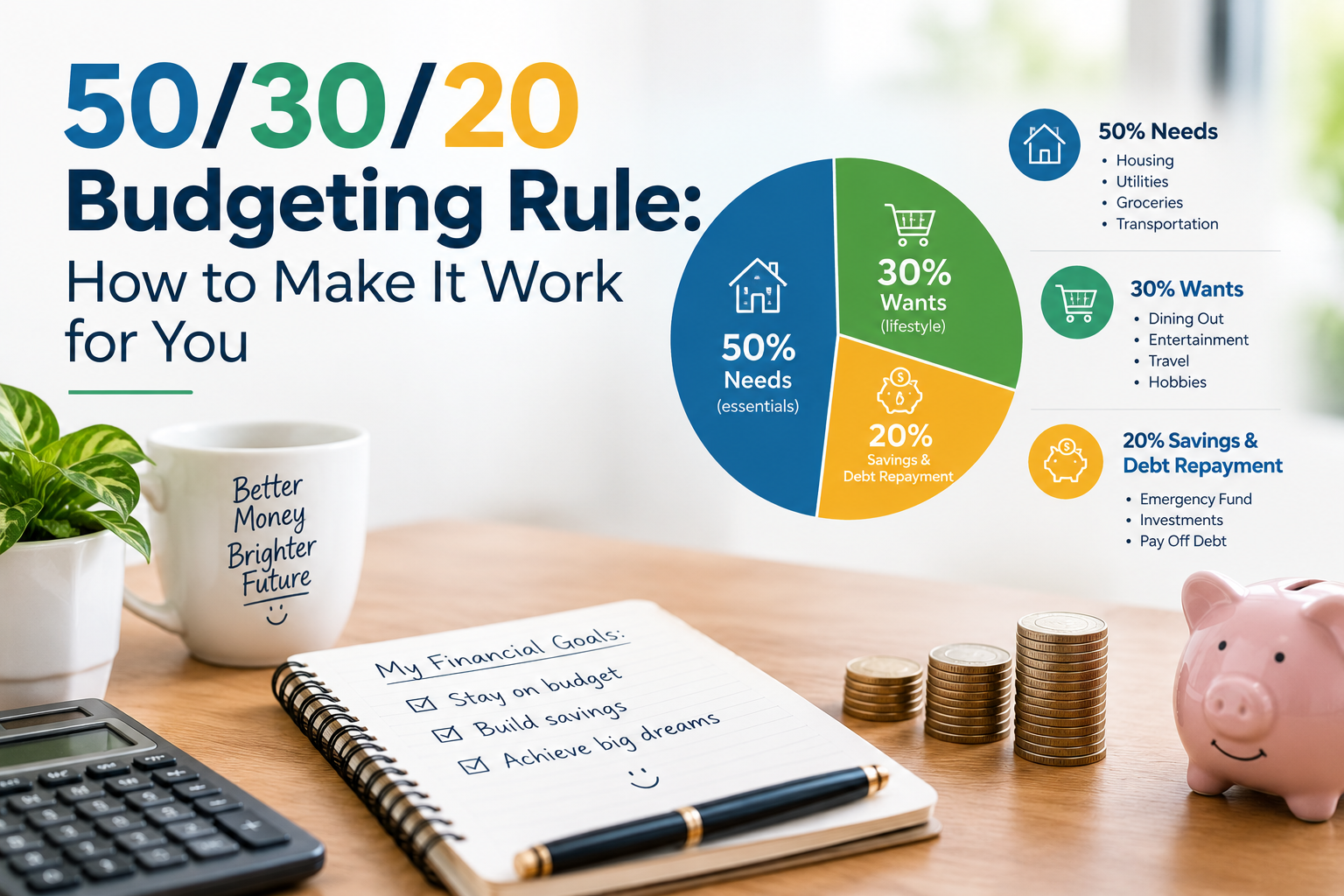
The 50/30/20 Budgeting Rule divides your monthly take-home income into three spending groups: 50% for needs, 30% for wants, and 20% for savings and debt repayment. It is a guideline rather than a strict financial requirement, so you can change the percentages when your circumstances demand it.
Here is how the three categories work.
| Budget category | Suggested share | Examples |
|---|---|---|
| Needs | 50% | Rent, groceries, utilities, essential transport |
| Wants | 30% | Dining out, hobbies, entertainment |
| Savings and debt | 20% | Emergency savings, investments, extra debt payments |
This Budgeting Rule works best when you calculate percentages using the money you actually receive after taxes and other payroll deductions. If you are self-employed, use a realistic estimate of your income after setting aside money for taxes and necessary business costs.
How to Make the Budgeting Rule Work for You
Calculate Your Monthly Take-Home Income
Start by adding up your regular income after taxes. Include salary payments and any reliable additional earnings. If your income changes each month, review previous earnings and use a cautious average rather than assuming every month will be your best one.
For example, imagine you receive $3,000 each month after taxes. Under this Budgeting Rule, your suggested limits would be $1,500 for needs, $900 for wants, and $600 for savings and debt repayment.
Separate Needs From Wants
Review your expenses and decide which ones are essential. Housing, basic food, utilities, necessary transport, essential insurance, and minimum debt payments generally belong in the needs category. Wants include optional expenses such as restaurant meals, streaming subscriptions, nonessential shopping, and entertainment. Some costs depend on your situation.
For example, a phone plan may be essential for work, while an expensive upgrade may be optional. The purpose of this Budgeting Rule is to help you recognize spending priorities without removing every enjoyable activity from your life.
Give Every Category a Realistic Limit
Compare your current expenses with the suggested percentages. If your essential bills already take up 60% of your income, do not ignore those bills to force your budget into a perfect split.
Instead, look for practical changes. You might compare utility providers, reduce unnecessary subscriptions, plan meals, or consider more affordable housing when a move is realistic. A flexible Budgeting Rule should reflect your actual costs rather than create an impossible plan.
Decide How to Use the Savings Portion
The final 20% can support several financial goals. You may direct part of it toward an emergency fund, retirement savings, planned purchases, or extra payments on expensive debt.
If you have no emergency savings, building a starter reserve may be a useful first goal. If you carry high-interest debt, compare the cost of that debt with your other priorities. Keep making required minimum payments and consider directing additional money toward the most expensive balance.
This Budgeting Rule helps you make savings a planned expense instead of waiting to see what remains at the end of the month.

A Practical Example of the 50/30/20 Budgeting Rule
Suppose a household has $4,000 in monthly take-home income. Its suggested budget would look like this:
| Category | Monthly amount |
|---|---|
| Needs (50%) | $2,000 |
| Wants (30%) | $1,200 |
| Savings and debt (20%) | $800 |
| Total | $4,000 |
The household might spend $1,100 on housing, $400 on groceries, $200 on utilities, and $300 on transport and other essentials. That uses the full $2,000 needs allowance. The household could then set a $1,200 limit for optional spending and allocate $500 to emergency savings and $300 to extra debt repayment.
This example shows how the Budgeting Rule turns a general idea into a practical monthly plan. Your own amounts will differ depending on your location, household size, debt and financial goals.
Benefits and Limitations of This Budgeting Rule
Why It Can Help
The main advantage of this Budgeting Rule is its simplicity. You do not need a complicated spreadsheet or advanced financial knowledge to begin. Three spending categories can make it easier to understand where your money goes and whether you are making progress toward your goals.
It also encourages balance. You can set money aside for future needs while keeping some room for entertainment and personal interests. Automating savings transfers can make this approach easier to maintain. The Federal Deposit Insurance Corporation (FDIC) recommends regular saving and setting clear financial goals as useful ways to build savings over time.
Where It May Fall Short
The main limitation is that not every household can afford to spend only 50% of its income on essentials. High rent, childcare costs, medical expenses or low earnings may leave little room for optional spending or savings.
This Budgeting Rule can also oversimplify complex financial situations. Someone managing irregular earnings or large debt payments may need a more detailed spending plan. Treat the percentages as starting points and prioritize essential bills before aiming for a perfect split.
Practical Tips to Stay on Track
A successful Budgeting Rule depends on regular review rather than perfect calculations. Track your spending for a month and compare actual expenses with your plan. Include irregular costs such as annual insurance premiums, school fees, home repairs, and vehicle maintenance. The CFPB recommends reviewing spending records carefully so your plan reflects real expenses.
You can also schedule an automatic transfer to savings after receiving your income. If money is tight, begin with a smaller amount and increase it when your situation improves. Review the plan whenever your income, household responsibilities or financial goals change. Most importantly, do not abandon the Budgeting Rule because one month goes off track. Adjust the figures, learn from unexpected costs, and continue with a realistic plan.

Frequently Asked Questions
Q1. What Is the 50/30/20 Budgeting Rule?
It is a money management guideline that allocates 50% of take-home income to needs, 30% to wants and 20% to savings and debt repayment. You can adjust the percentages to suit your circumstances.
Q2. Does the Budgeting Rule Work on a Low Income?
It can provide a useful starting point, but low-income households may need to spend more than 50% on essential costs. Cover necessary bills first, then save whatever amount is realistic.
Q3. Should Debt Payments Be Included in the 20% Category?
Minimum debt payments are often included with essential expenses because they are required obligations. Additional repayments can be allocated to the savings and debt category. Use one consistent method and avoid counting the same payment twice.
Q4. Can I Change the 50/30/20 Percentages?
Yes. The percentages are guidelines, not mandatory limits. You might temporarily reduce spending on wants or use a different allocation when housing costs, family needs or income change.
Q5. How Can I Start Following This Budgeting Rule Today?
Calculate your monthly take-home income, list your expenses, group them into needs, wants and savings or debt repayment and set realistic limits. Track your spending and review the results at the end of the month.
Final Thoughts
The 50/30/20 method offers a straightforward way to organize your income and make more intentional financial decisions. Its greatest value is not achieving exact percentages every month but creating a plan that supports your current needs and future goals.
Start with the numbers you can afford, review your spending regularly, and make changes when life demands them. A practical Budgeting Rule should help you feel more informed and prepared, not make everyday money management harder.
At MoneySavePath.com, our goal is to make personal finance easier to understand so readers can make informed decisions about spending, saving, and managing debt.
2 thoughts on “50/30/20 Budgeting Rule: How to Make It Work for You”